
Front & Centered
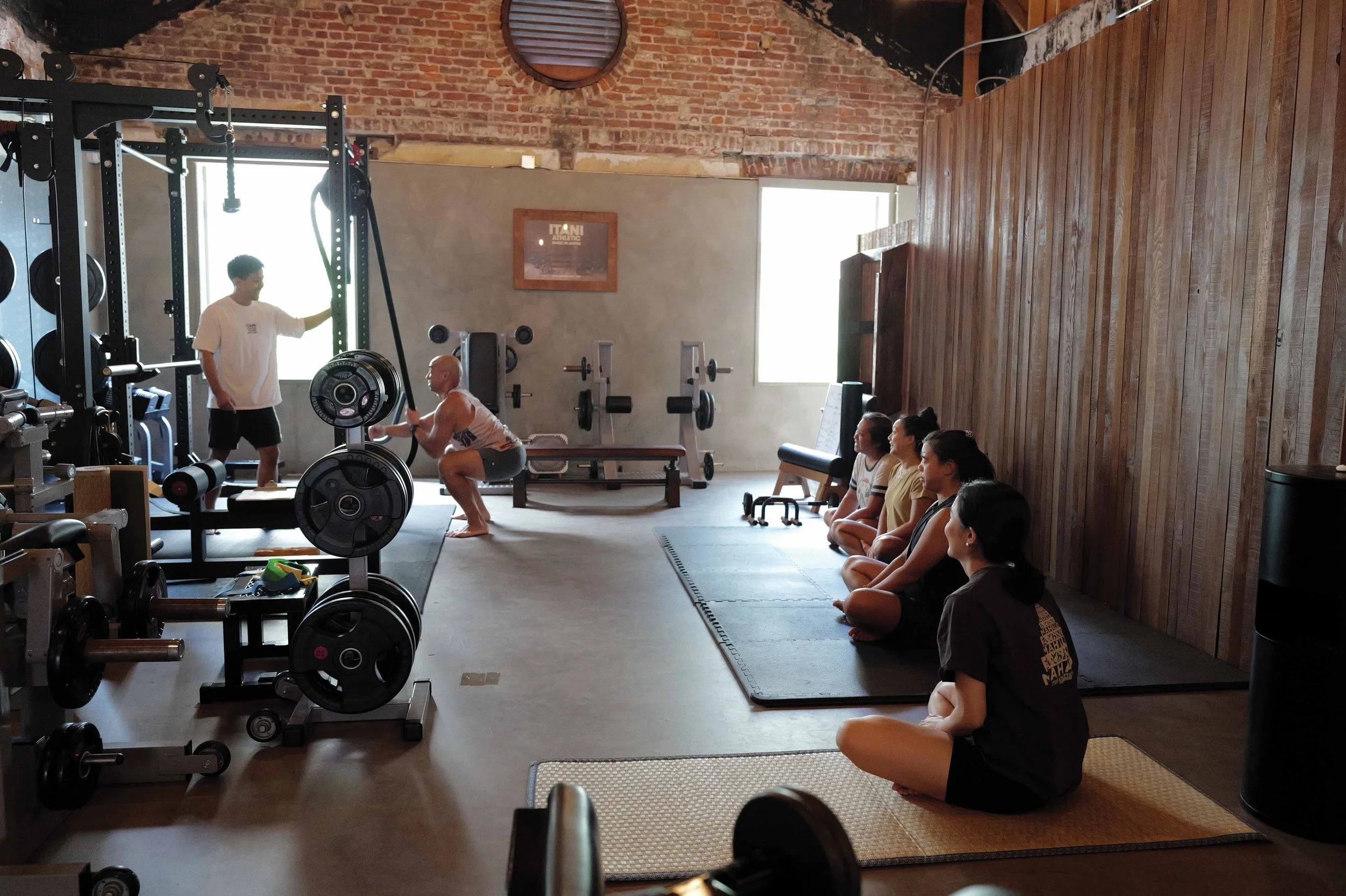
The dojo environment encourages real conversation while moving.
(All photos courtesy Itani Athletic Club.)
Nestled in the historic 1870 brick warehouse on Merchant Street, the Itani Athletic Club carries a quiet sense of history. I walked in expecting a straightforward interview with Michael Nakagawa, one of the co-founders. We had already agreed that I would partake in an introductory training session to experience the dojo’s process firsthand. What I didn’t expect was the questionnaire.
Before we stepped onto the floor or touched any of the signature Tanren machines, Nakagawa handed me a questionnaire. “I want to know why you’re here,” he said. “Write your goals — three months, one year, and ten years. Be specific.”
I sat there, suddenly uncomfortable. Answers like “lose weight” felt wrong. So I wrote honestly: more discipline with eating and drinking, spending quality time with my wife, continuing to play water polo as a 54-year-old, and significantly reducing my daily back pain. In ten years, I wanted to be physically and spiritually healthy.
As I shared my answers, I found myself opening up about old injuries and bad habits that had quietly crept back into my life. This act of writing and speaking those goals forced me to confront both my good and bad habits. Nakagawa listened with calm focus. Only then did we begin the training session.
Itani Athletic Club is a modern dojo, not a typical gym. Opened five years ago in downtown Honolulu, it blends Japanese martial arts philosophy with the aloha spirit. The heart of the approach is “Work In, Live Out” — intentional, medium-intensity training that improves how you move and live every day. The goal is lasting lifestyle change, not just temporary results.
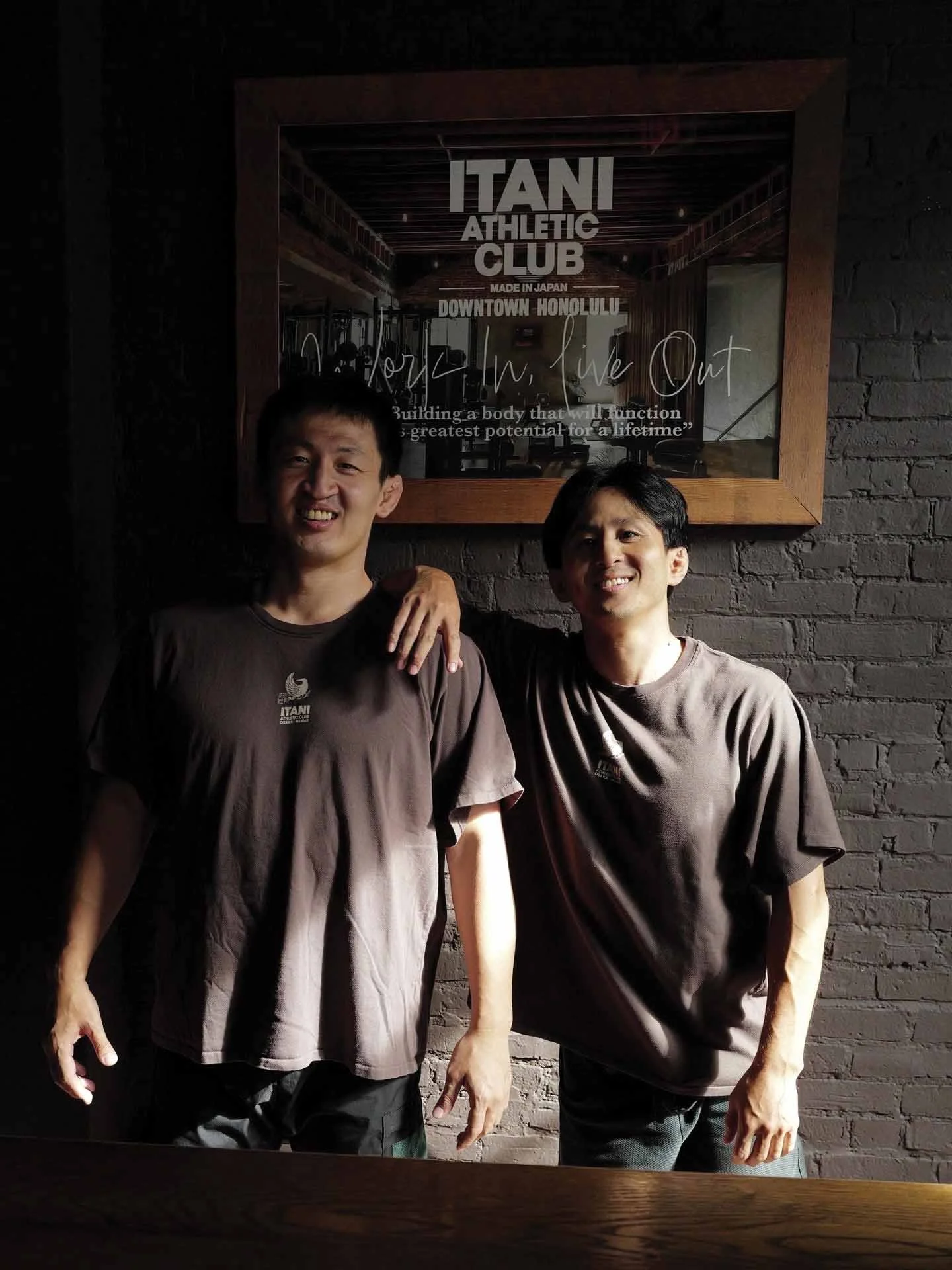
A modern Honolulu dojo, Itani Athletic Club fuses discipline and aloha, led by Michael Nakagawa and Takeshi Itani.
Nakagawa, a retired MMA fighter and longtime wrestling coach to UFC champion Max Holloway, has a baby face and shaggy hair that conceal his cauliflower ear, a mark of years spent on the mat. Alongside co-founder Takeshi Itani, a judo black belt, they built the dojo from personal hardship. Michael lost a brother to overdose and battled severe injuries. Itani survived childhood health issues and a broken neck that left him paralyzed for nearly a year. Together, they fused Eastern philosophy with practical training into something deeply personal.
We began with simple assessments. Nakagawa had me jump, twist, and breathe. Within minutes, he spotted my tight shoulder, over-rotated hip, and uneven movement patterns. Then we moved to the Tanren machines, which focus on control, balance, and minimal joint strain.
On the squat machine, he corrected my knee position and slowed my movement. "Focus on your tanden, your center," he said. I struggled. My lack of consistency showed, and I felt exposed. Michael stayed patient. "That just means you have room to grow."
The breakthrough came on a narrow wooden plank, barely an inch off the ground. I was asked to squat slowly without my toes or heels touching the ground. "In martial arts, if you're off-center, you're easy to throw," he explained. I wobbled at first, but refocusing on my tanden, I found balance. When I rose smoothly, Nakagawa lit up. It felt like my own "wax on, wax off" moment.
The dojo environment encourages real conversation while moving. Itani draws successful members, whom the dojo calls "creators." As Nakagawa explains, a creator is anyone who comes to build habits that support their physical and mental well-being in daily life: eating, sleeping, work, relationships and home.
Many are entrepreneurs, business owners, doctors, or lawyers with time and financial flexibility, yet they sense something missing: a true community where they can be vulnerable. In their everyday worlds, they can't show weakness, but here on the training floor, they can't hide it. They have status and success, yet long for the simple joy of sharing both pain and victories with others who understand.
The philosophy at IAC is simple: "Bless yourself first, then bless others. Most importantly, have fun." What matters is awareness, daily habits and mindset.
What began as an interview became something more. I'm learning to find my center not just in training, but in how I eat, connect and live. The work is ongoing.
If you're seeking more than just another workout, Itani Athletic Club offers something rare: a place to build real, lasting balance. I'm still on that path. You might find yours here too."


(All photos courtesy Itani Athletic Club.)