
The Decisive Moment
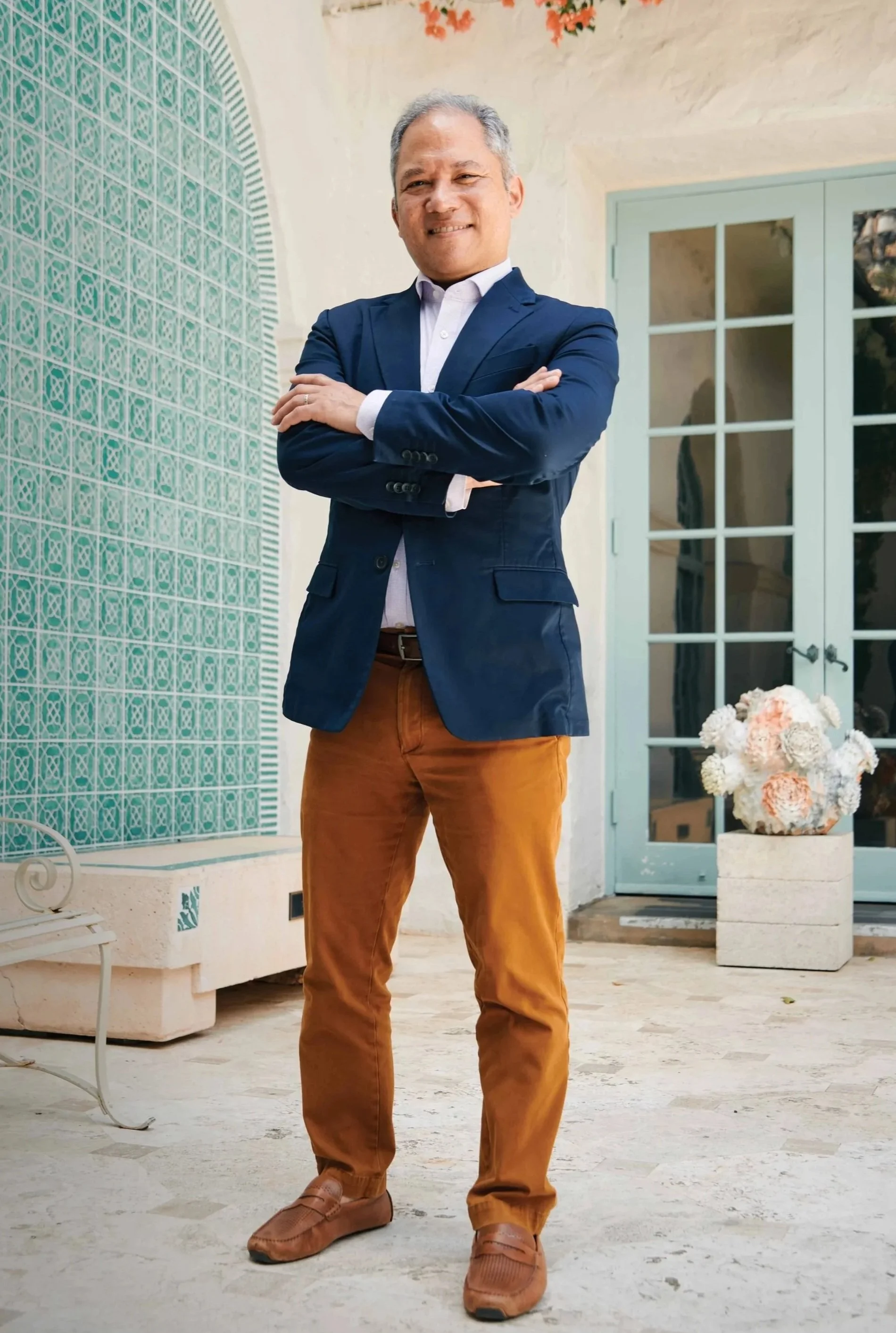
As the Honolulu Museum looks toward its centennial, David Odo sees an opportunity to expand HoMA and invite more of Hawai‘i into it.
(Photo by Paul Strouse)
When the Uber driver realizes you’re going to the Honolulu Museum of Art, he brightens.
“Good,” he says. There aren’t enough people visiting that wonderful place. We need to get as many folks there as we can.
Absolutely, couldn’t agree more. So you ask: What does he love most at HoMA? When was the last time he went, and which exhibitions does he recommend?
Actually, he’s never been. (Despite having lived in Hawai‘i for 25 years.) He tells you he’s also never been to Bishop Museum either, as if that balances things out.
“I think for too many folks, it’s like that,” says David Odo, hearing the story. “I think that’s our responsibility to kind of change that perception.”
Odo is familiar with these types of conversations. Before becoming HoMA’s director and CEO in September, he held positions at some of the country’s most prominent museums and universities, including the Yale University Art Gallery and Harvard Art Museums. His academic and research career has taken him to Oxford, the Smithsonian, Amsterdam’s Rijksmuseum, and the University of Tokyo. Odo most recently served as director and chief curator of the Georgia Museum of Art.
Along the way, he says, friends and colleagues would always be surprised to hear what Honolulu had sitting in its galleries.
“They know all about the beautiful beaches in Hawai‘i,” Odo says, “but they were really surprised when I told them about the strength of [HoMA’s] collection, especially the strength of the Western art collection.”
For instance, there’s the museum’s Kress collection, which comprises 16 paintings spanning four centuries of European art, from a 14th-century Madonna and Child to Renaissance portraits of saints and apostles to 18th-century Italian landscapes. The collection came to HoMA in 1961 through the Samuel H. Kress Foundation, whose gifts helped put major works of Renaissance art in museums across the country.
Or the Honolulu Museum building itself, an unusual blend of Hawaiian, Chinese, and Spanish influences: lava rock walls, white stucco, lanai-like spaces, and open-air courtyards designed to catch the natural light and trade winds. (In the Chinese Courtyard, even the teal glazed tiles have a history of their own, salvaged from houses demolished during the expansion of Bishop Street in the 1920s.)
Or the fact that HoMA is turning 100 years old next year, marking a century of collecting, exhibiting, and making a case for art in the middle of the Pacific. For the museum, it’s a milestone. For Odo, it’s also a homecoming.
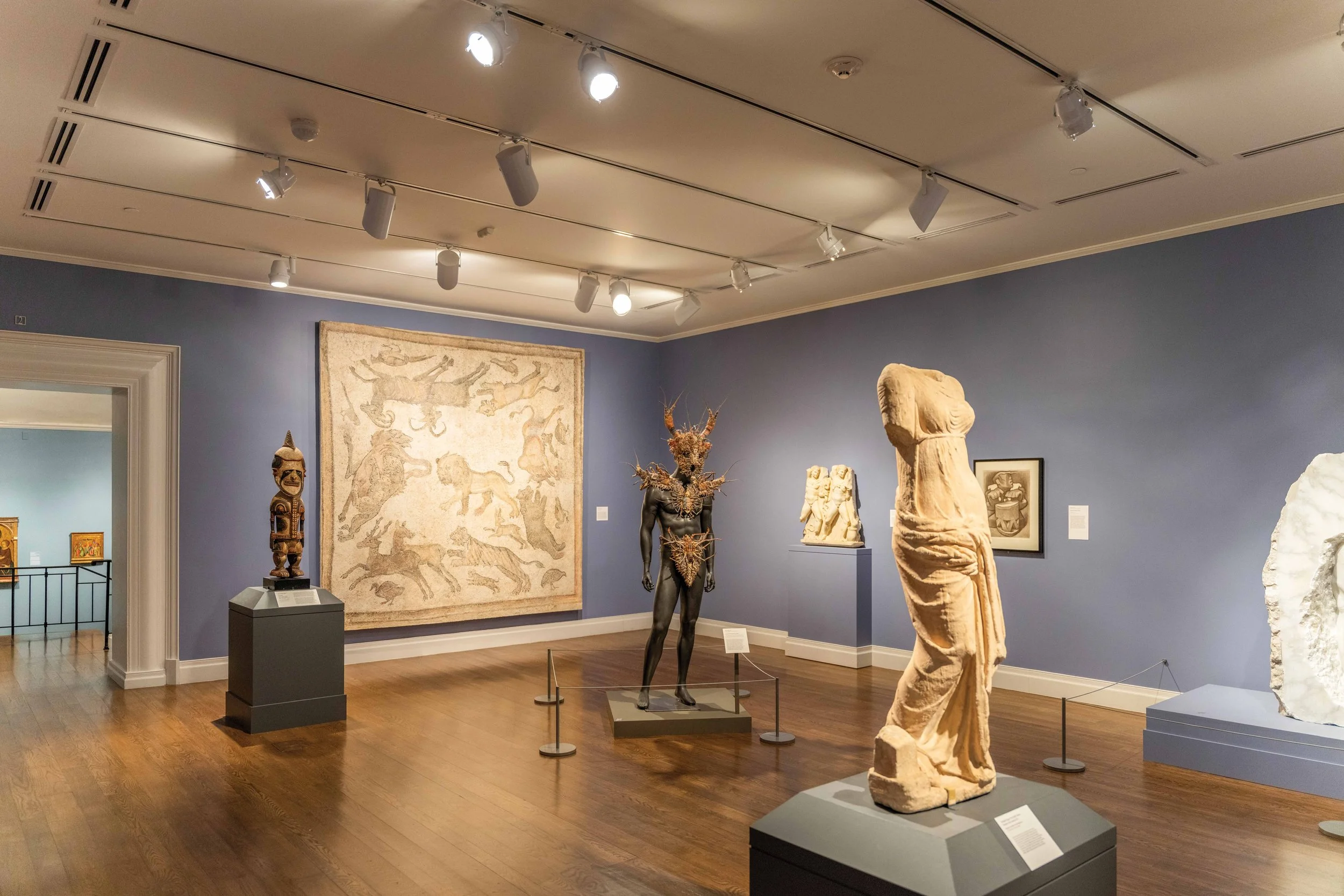
The Honolulu Museum of Art has long been a place where different cultures and perspectives meet.
(Photo courtesy Honolulu Museum of Art.)
Odo grew up in Kailua, going to Lanikai Beach and paddling out to the Mokes. “I look up at the mountains when I’m swimming on the water, and it feels like I’m a kid again.”
His parents made museums part of family life, taking Odo and his siblings to HoMA, then still known as the Honolulu Academy of Arts.
“It really felt like a wonderful window onto different ways of being and thinking,” he recalls. “I don’t know how I would have conceptualized it at the time, but it really felt like quite an adventure to come to the museum.”
Being open to different ways of thinking was something Odo encountered at home too. His father, Franklin Odo, was a pioneering scholar of Asian American and Pacific history, and the first permanent director of the University of Hawai‘i’s Ethnic Studies program.
“One of the biggest lessons I learned [from my father] is being open to new ideas and willing to question your own belief system without undervaluing your own thoughts,” says Odo. “Which is easy to say but is actually very difficult to be open without swaying in the wind.”
At Columbia, Odo studied East Asian Studies; at Oxford, he earned his doctorate in social and cultural anthropology. His goal wasn’t to become a museum director. Odo went to graduate school to study 19th-century photography, initially imagining he might become a documentary filmmaker instead.
His research led him to the Ogasawara Islands, a remote Japanese archipelago also known as the Bonin Islands. In 1830, a multinational group of Americans, Europeans, and Hawaiians left Honolulu and established the islands’ first permanent settlement. Decades later, a Japanese government expedition sent to claim the islands included a photographer, using a technology that was still in its infancy.
“Thinking about photography and colonialism was just mind blowing and fascinating,” says Odo, who became interested in the ways visual culture intersects with the politics of representation. “As I kind of moved from anthropology and history into art, I found the 19th century still really spoke to me.”
His studies brought him into museums around the world. Odo found himself spending more and more time with collections. “It really became clear that I loved museums so much,” he says. What began as research gradually became a career.
Odo has spent years thinking about whose perspectives get captured (and who gets to do the looking) as well as how images and museums shape the way we understand the world. These questions are close to home for Odo in Hawai‘i, and in his new role at HoMA. His goal is for the museum to continue being a place where different histories and narratives can exist in conversation.
“The way I hope that we can move forward is [by] truly centering the arts of Hawai‘i,” says Odo. “That doesn’t mean 19th-century photography of Japan or classical Western painting and sculpture should be forgotten. But that also doesn’t mean we ignore what’s happening right in front of us, in our own community.”
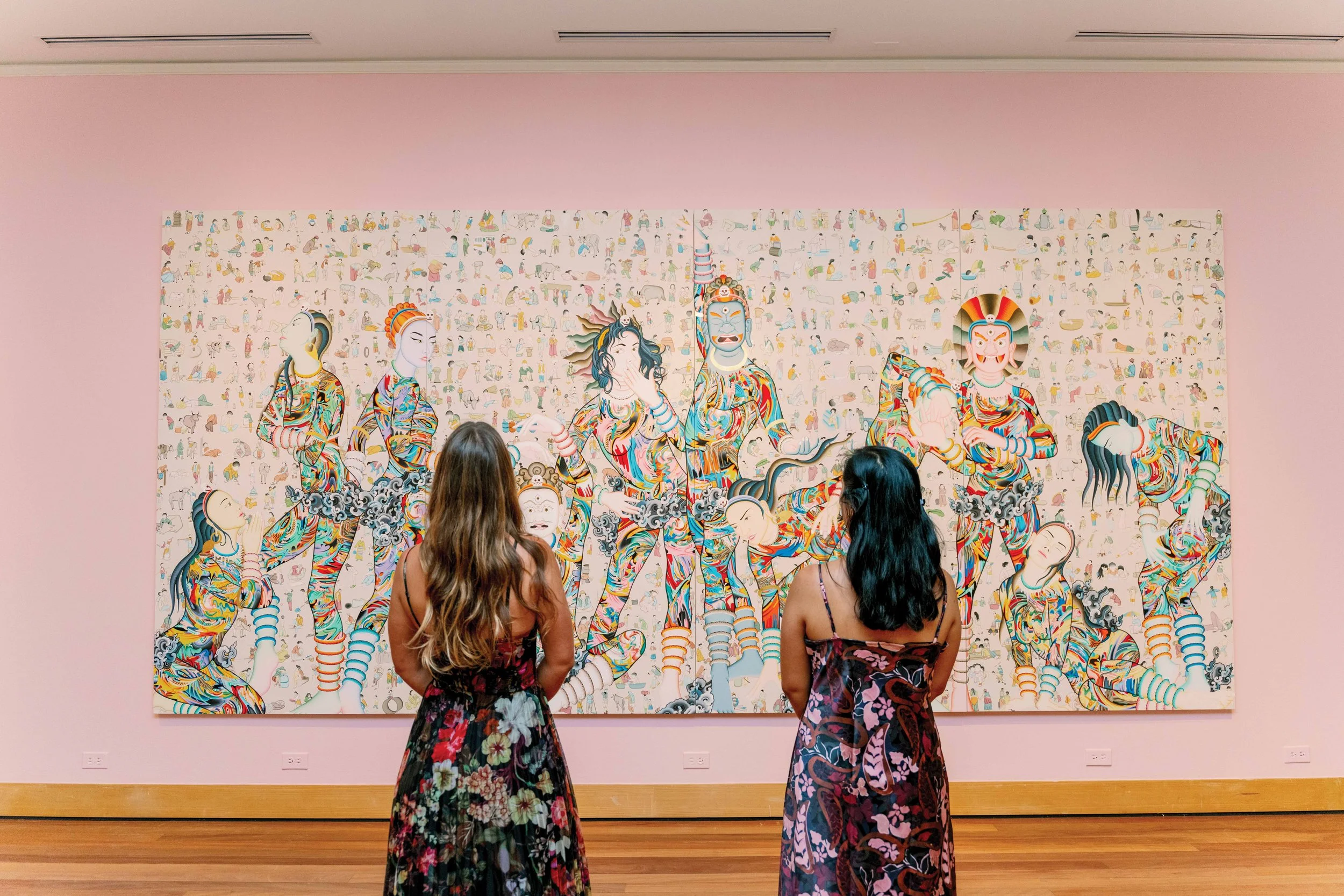
“I think the museum can really help be a vehicle for spreading that information, for sharing the wonderful work that’s being done,” David Odo says.
(Photo courtesy Honolulu Museum of Art.)
Coming home has meant seeing Hawai‘i with fresh eyes. Odo has returned to familiar places and found them changed. Like the Kailua Beach of his childhood, “but to see the erosion … that’s tough.” Or visiting the supermarket and being reminded of the eye-watering grocery prices in Hawai‘i.
“Even though I have a sense of familiarity and belonging here,” Odo says, things have changed. “[I’m] also realizing I have a lot to learn.”
That’s partially what makes this moment exciting for Odo, especially as HoMA approaches its centennial in 2027. The museum already draws more than 100,000 visitors a year (plus one, if we can convince that Uber driver to finally visit) but Odo is thinking beyond purely numbers. He sees museums in Hawai‘i being on the cusp of a new conversation that can speak to local communities while also pushing back against the tourist gaze that so often defines the Islands from afar.
“I think the museum can really help be a vehicle for spreading that information, for sharing the wonderful work that’s being done,” says Odo. He hopes the centennial will be an opportunity to introduce HoMA anew, to both the people who live here as well as the world beyond Hawai‘i.
“I want the community to have a lot of pride in us, and I know many people do.”
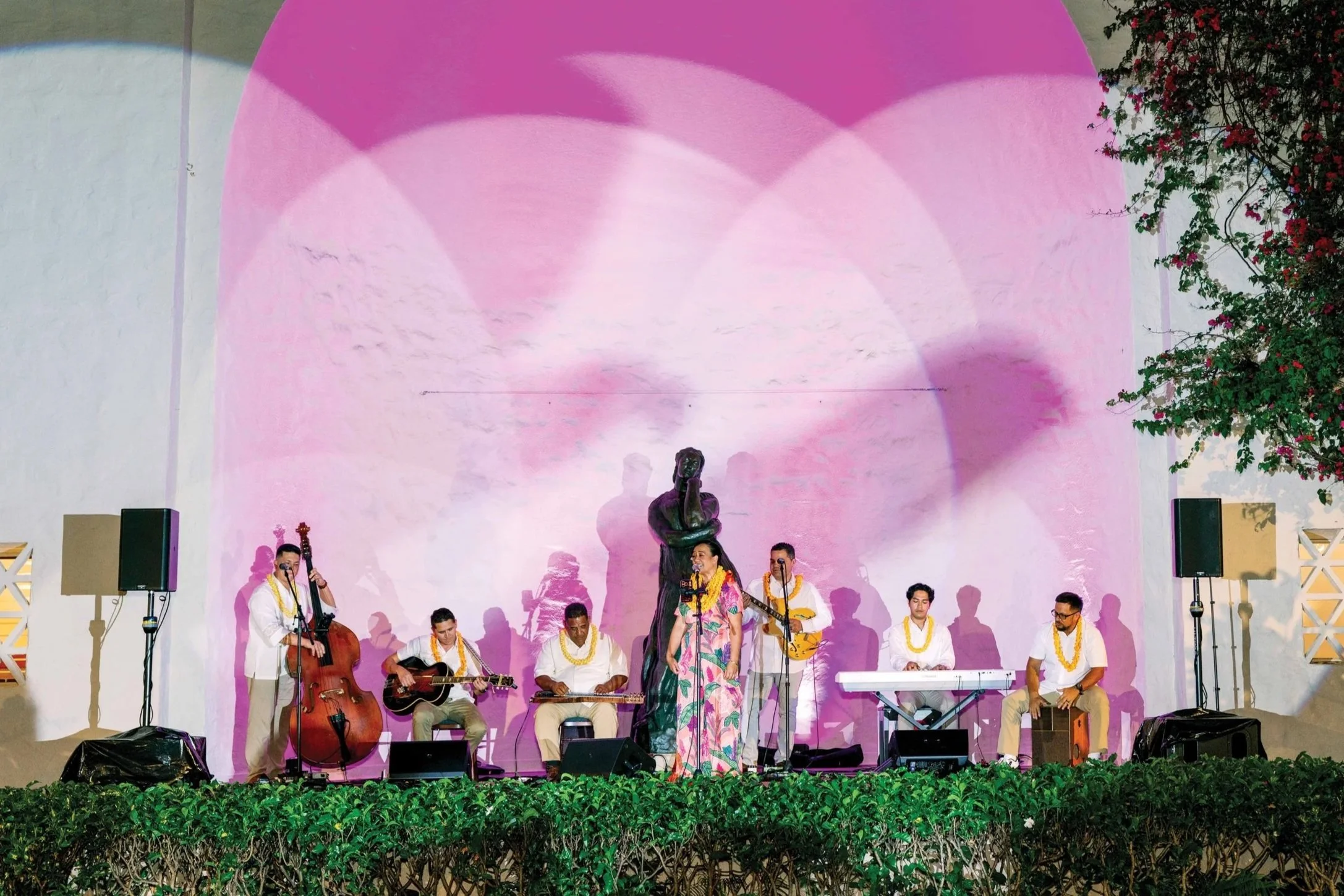
(Photo courtesy Honolulu Museum of Art.)