
Original Stage
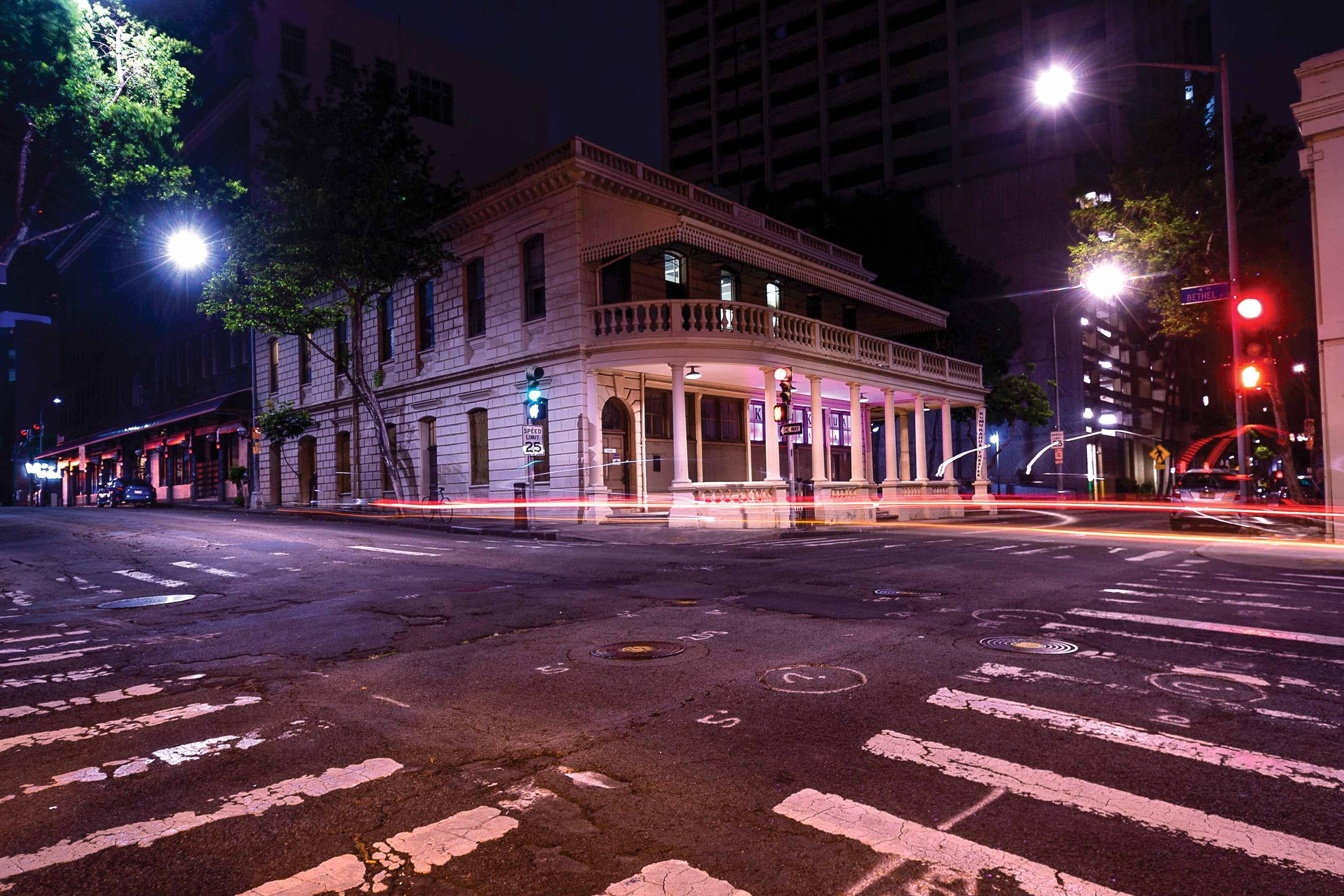
Inside Kumu Kahua’s intimate downtown space, audiences can recognize their families, neighborhoods, and lives on stage.
(Photo courtesy Kumu Kahua Theatre and Marcel Saragena.)
Long before he became the artistic director of Kumu Kahua Theatre in downtown Honolulu, Harry Wong III was a first-year acting student at the University of Hawai‘i. In 1989, as a favor to his professor, he agreed to serve as both assistant director and stage manager for The Conversion of Ka‘ahumanu, a historical drama written by Victoria Nālani Kneubuhl about the arrival of Christian missionaries in Hawai‘i. One evening, Wong’s parents were in the audience. After the show, his father turned to him and said quietly, “You know, the missionaries weren’t that nice.”
Wong was surprised. He had grown up in a household where religion and politics were not topics for conversation. Yet there he was with his father that night, speaking at length about the play. About the upheaval that missionaries brought to the Islands, the nuances of cultural identity in 19th-century Hawai‘i, and the ways Hawaiian women navigated tradition and foreign influence. “For some reason, seeing this play opened him up,” Wong says. “I think that’s one of the things that Kumu Kahua can do for people. It was inspiring then. It still inspires me today.”
Since 1971, Kumu Kahua Theatre has been the home for stories about Hawai‘i. Founded by UH graduate students led by theatre professor Dennis Carroll, the organization began as an experiment in sharing local narratives seldom performed live. More than five decades later, Kumu Kahua (“original stage” in Hawaiian) remains the only theatre in the country, possibly the world, dedicated exclusively to works written by, about, and for the people of Hawai‘i.
Instead of Scottish castles or New York tenements, plays at Kumu Kahua take place in sugarcane fields, plantation homes, Makiki low-rise apartments, Big Island coffee farms, even Waikīkī Beach. From its 100-seat black box theatre in the historic Kamehameha V Post Office building on Merchant Street, audiences can see their own families, neighborhoods, histories, and struggles play out on stage.
“We welcome everyone but I especially want locals, whether they think of theatre as ‘high art’ or just something they had to read in high school, to view themselves in these plays and have the joy of recognition,” says Wong. “I want them to leave their house, come here, sit next to strangers, and experience something meaningful together. This is how theatre creates community.”
It’s the type of theatre that attracted Kumu Kahua’s managing director Donna Blanchard from the Midwest nearly 15 years ago. Previously the managing director of Chicago Street Theatre in Indiana (and an award-winning actor and director herself), Blanchard was drawn to organizations telling stories about their own communities; shows connected to specific places and culture.
“I didn’t come here because I wanted to live in Hawai‘i,” Blanchard says. “I came here because I think everyone’s story is special. Hawai‘i’s people should be the tellers and subjects of their own stories. Kumu Kahua is a place where that philosophy thrives. My hope is that more theatres and towns will hear about what we do and say they want to do that too.”

Austin Sunderman, Kamehana Kamakawiwoole, Micah Souza, Brandon Karrer, and Claire Fallon in Way of a God.
(Photo courtesy Kumu Kahua Theatre and Brandon Miyagi.)
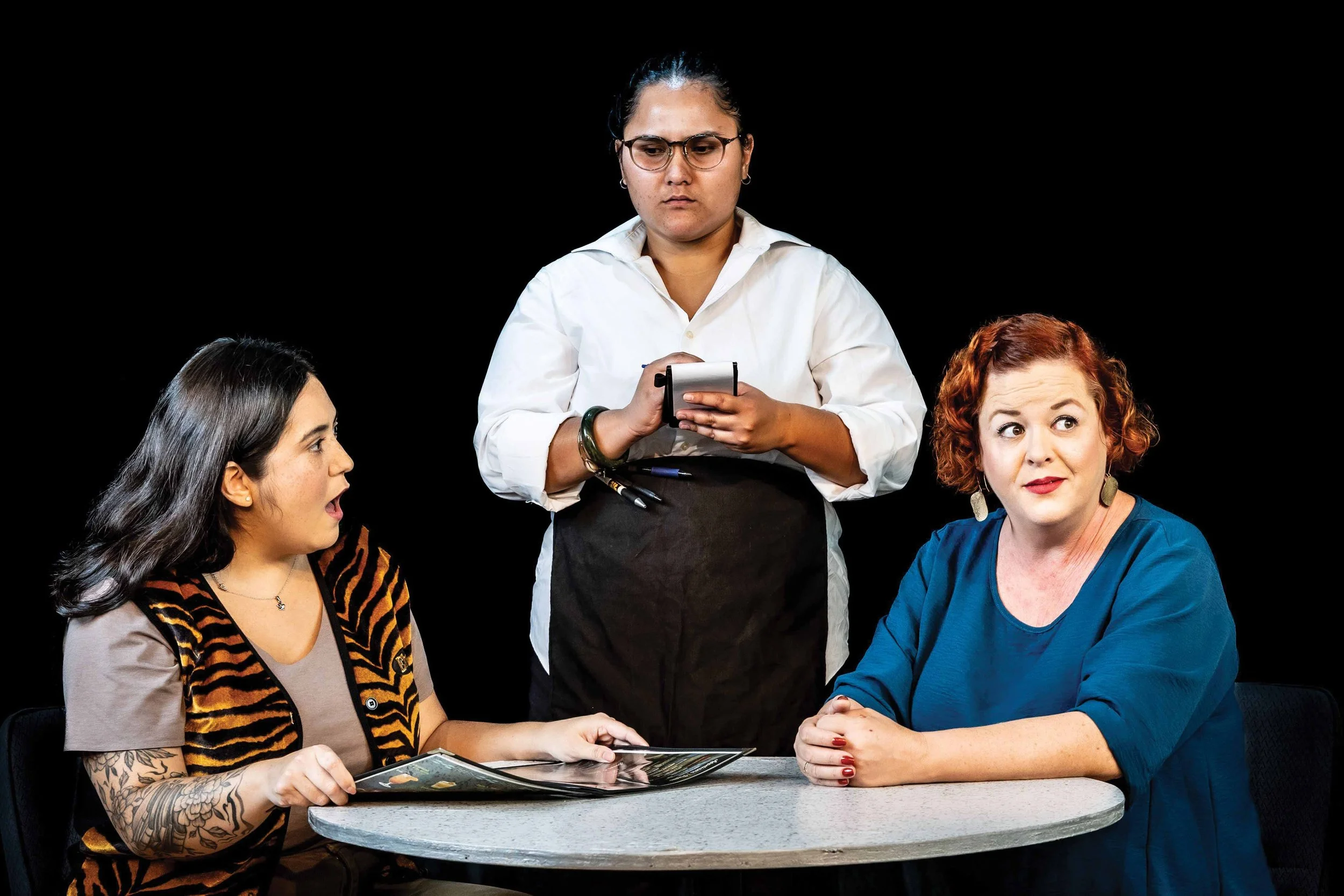
Alysia-Leila Kapa‘a, Kirstyn Trombetta, and Shannon Winpenny in Smother.
(Photo courtesy Kumu Kahua Theatre and Brandon Miyagi.)
Thanks to Wong’s artistic vision and Blanchard’s creative and business acumen, Kumu Kahua has weathered the challenges of recent years, from pandemic lockdowns to shifting political and economic climates that continue to leave many small theatres struggling to survive. In 2020, when social distancing mandates scattered audiences, Kumu Kahua went virtual. The theatre transformed its 50th season into a fully live Zoom production, complete with digital sets, real-time editing, and actors performing from their homes across O‘ahu.
This instinct to meet the moment isn’t new. After Hawai‘i’s false missile alert in 2018, Kumu Kahua put out a call for personal stories, inviting residents to share how they spent those harrowing minutes. The result was 38 Minutes, an original production that captured the fear, confusion, and even humor of the missile scare, staged just months after that surreal morning.
“Right after September 11, we did a play about a Hawaiian terrorist blowing up a hotel. That was January 2002,” Wong says. “It had actually been chosen before 9/11 and the board discussed whether we should go ahead or cancel the play. Dennis Carroll said, of course we should do it. Sometimes these stories are very topical. Though I acknowledge these subjects might be difficult for audiences at first.”
Last year, Kumu Kahua’s 54th season had a strong focus on LGBTQ+ characters and themes, with plays including Lovey Lee written by Moses Goods, about a young queer Hawaiian finding his way in the 1970s, and Ryan Okinaka’s The Golden Gays, a heartfelt comedy about aging drag queens facing their golden years (inspired by The Golden Girls). Perhaps fittingly, at a time when women’s rights are under renewed scrutiny in Washington, Kumu Kahua’s 55th season celebrates strong female protagonists whose stories reflect resilience and complexity.
“Being involved in theatre all my life, there have been plenty of times I’ve said, ‘Boy, it’d be nice if we had more great roles for women.’ At a recent meeting, Harry [Wong] said, ‘We’re going to have a whole season of female protagonists,’” says Blanchard. “Not all the shows are written by women but they all have great roles for women, and that’s a start. As a culture, we’ve been looking at male-driven plays for 2,400 years. It’s time.”
The season opened in August with Smother, a comedy about a mother who goes to extreme lengths to control her daughter’s love life. The play was written by Sara Ward, Kumu Kahua’s box office manager and frequent props designer, who developed the idea at one of Kumu Kahua’s free writer’s workshops (and penned much of the script on her breaks at the theatre). Eric Anderson’s Outlandish, Kumu Kahua’s next play, dramatizes a fictionalized meeting between real-life Victorian travel writer Isabella Bird and the newly-crowned King Lunalilo in 1870s Hilo. “This year, lovely dinner for friendly king. Next year, friendly king asked to step aside. … If not next year, then someday soon. Inevitably soon,” Lunalilo says in Outlandish.
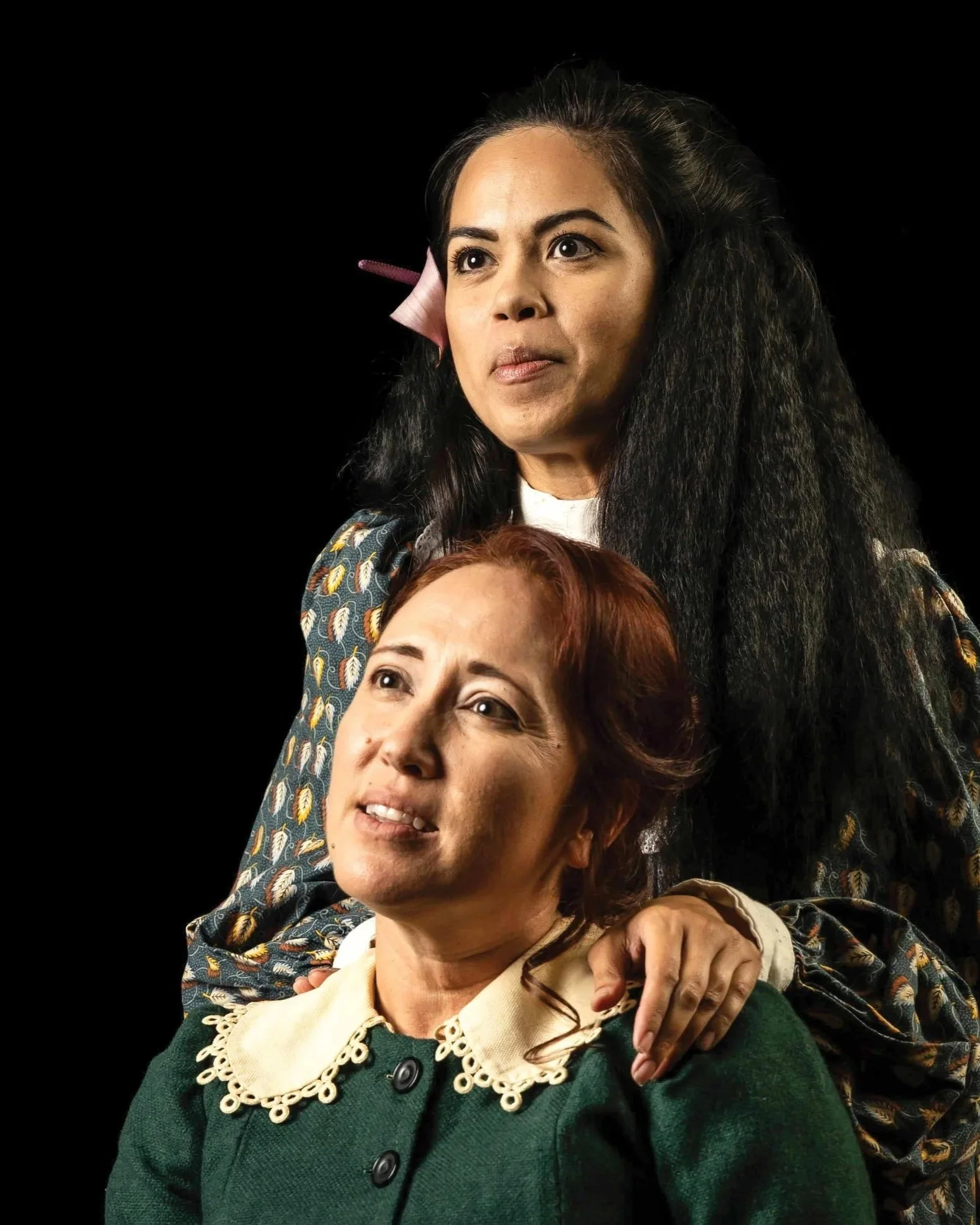
Julia LoPresti and Kanoe Perreira in Outlandish.
(Photo courtesy Kumu Kahua Theatre and Brandon Miyagi.)

Kris10 Misaki and Daron Lamont Gaskin in Smother.
(Photo courtesy Kumu Kahua Theatre and Brandon Miyagi.)
“I’m a little like Rick Rubin: I believe the audience doesn’t know what they want, all they know is what came before,” Wong says. “If what came before is comforting, that’s all they’ll ever want. As an artist, I’m looking for what people don’t know they want yet. That’s one of our goals.”
At the end of January, Kumu Kahua’s 55th season continues with Two Nails, One Love, written by Lee A. Tonouchi and based on the novel by Alden M. Hayashi, about a recently single gay man living in New York City. When his estranged mother from Hawai‘i arrives unexpectedly, the pair are forced to confront a painful family history about her incarceration and deportation during World War II.
In Lois-Ann Yamanaka’s Blu’s Hanging, adopted for the stage by R. Zamora Linmark, a Hansen’s Disease survivor struggles to care for his three children amid poverty and loss, while his eldest daughter Ivah must choose between staying with her family or seizing an opportunity to attend a private boarding school.
The season closes with Memory Beads written by Diane Aoki, about a woman who grapples with the legacy of Alzheimer’s in her family by collecting “memory beads”—stories of her Okinawan ancestors, her mother’s childhood in Hilo, and her own path toward self-acceptance. All revealing the bonds between mothers and daughters across five generations.
“Our local stories are just as rich and just as important as the stories of any other place, any other culture,” says Wong. “That’s ultimately what Kumu Kahua is about. Our stories deserve a space and a stage to be shown.”
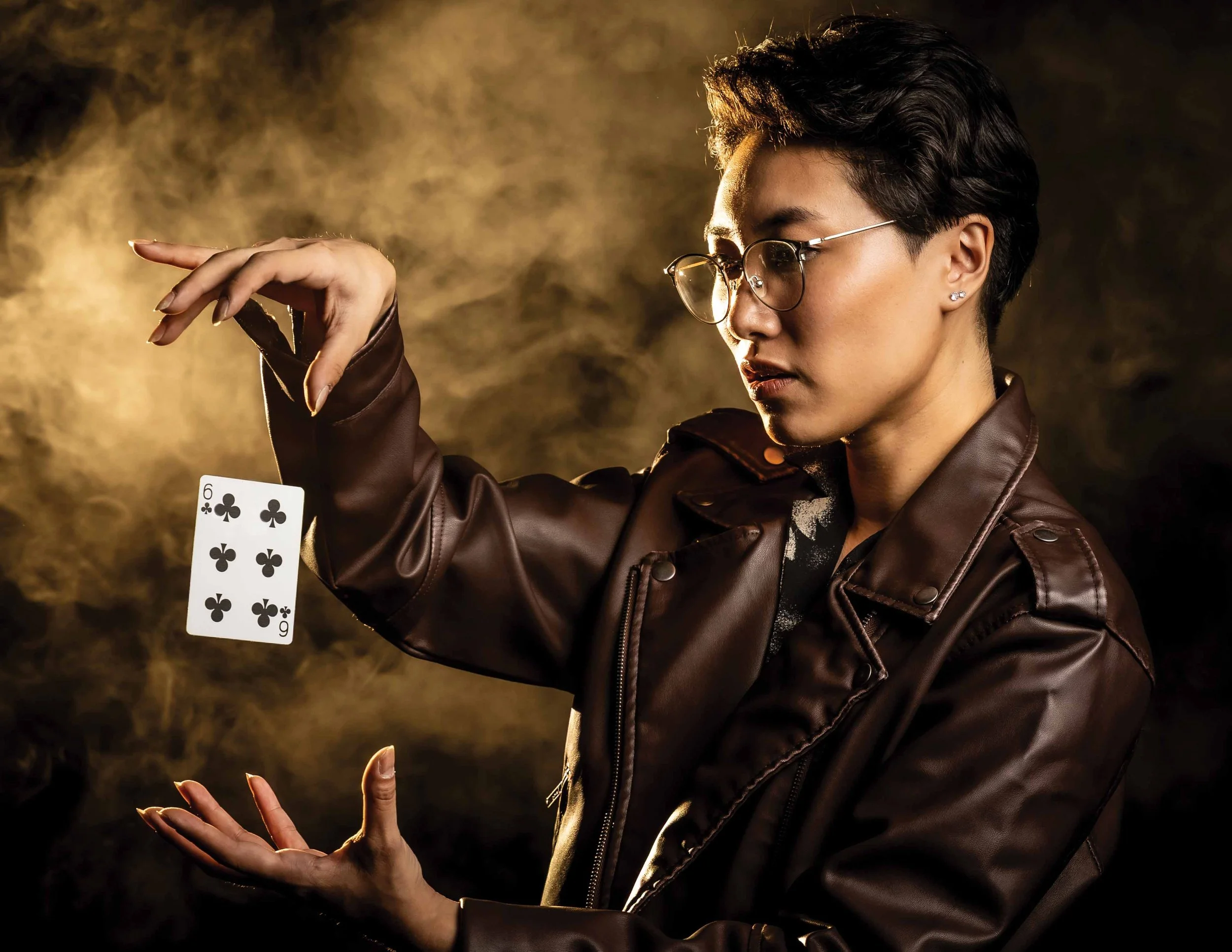
Shane Chung in Poly Amnesia.
(Photo courtesy Kumu Kahua Theatre and Brandon Miyagi.)