
All in a Lei's Work
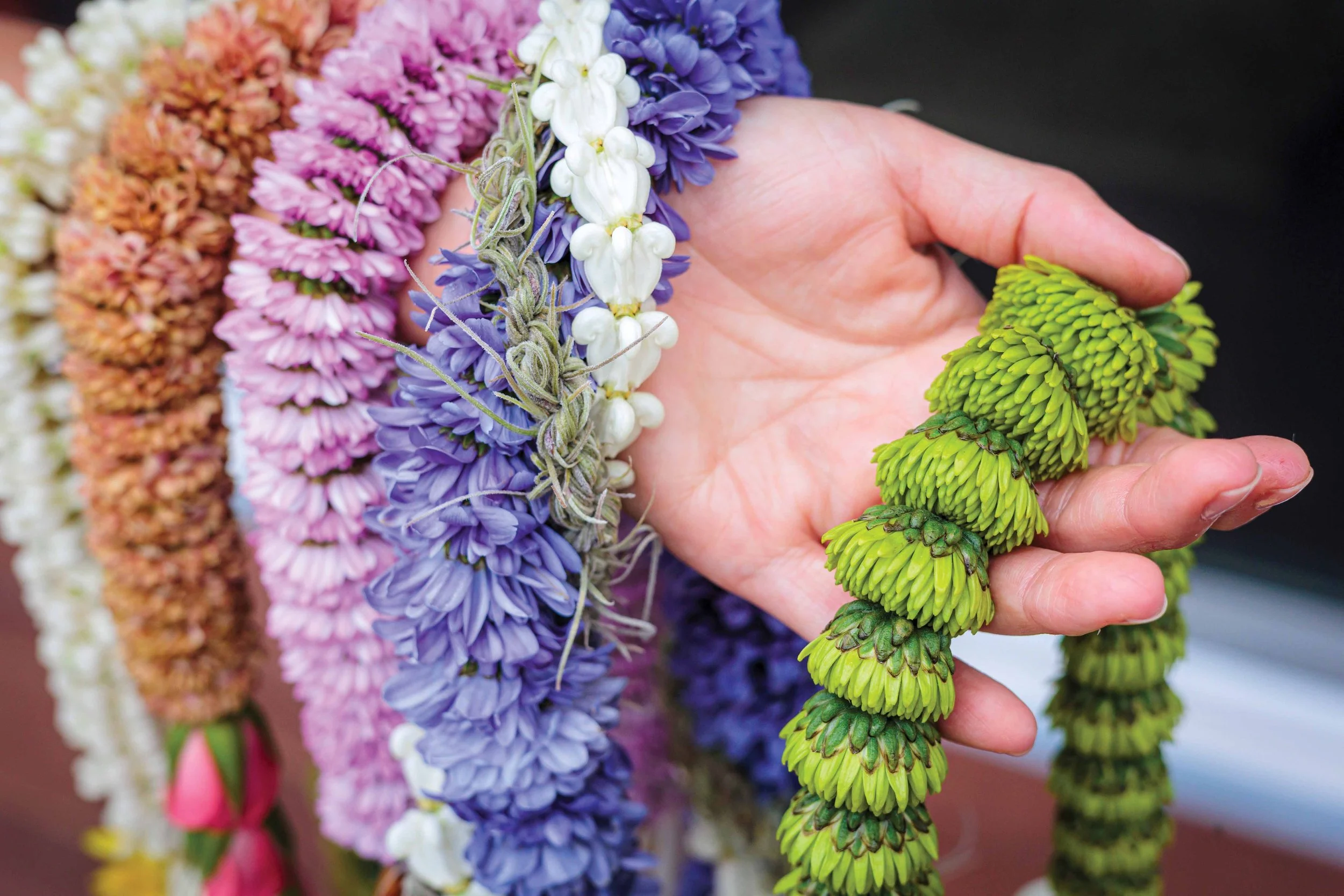
Founded in 2023, Stamen + Style grew from a pandemic-born creative spark, rooted in kokedama and driftwood air plants.
(All photos by Rae Huo.)
In a quiet O‘ahu neighborhood, where pakalana climb archways and blue jade drapes from a newly built pergola, scientist Jill Harunaga, Ph.D., is conducting experiments — only now, her laboratory is a garden, and her medium is lei.
The same meticulous eye that once traced the development of embryonic cells now examines petals and stems, patterns and textures, with equal precision. Stamen + Style, founded in February 2023, didn’t begin as a business plan but as a spark of creativity, one that took root during the pandemic, when Harunaga had been filling her home with kokedama and air plants on driftwood. When her oldest began preschool, she turned to lei-making, weaving together the blossoms in her yard as gestures of gratitude for her daughter’s teachers.
“I didn’t have enough flowers in my yard to make one lei out of one type of flower,” explains Harunaga, who cites pakalana as her favorite, followed closely by pua kenikeni and blue jade when they’re in bloom. “So I cobbled together several types to make something new.”
What started as improvisation revealed itself, over time, as instinct. That intuitive blending of textures and blooms would become her signature flower-blocking style — intentional segments of contrasting hues and forms rather than the repetition of a single flower.
The method is both practical and creative. In an era when many homes no longer have abundant yards, it allows her to honor tradition while stretching it, applying principles from haku and lei po‘o to lei kūi and other forms. “For me, it’s the intention behind the lei,” she says. “There’s a time and a place for the traditional look and for the nontraditional look.”
The name Stamen + Style itself reflects a scientist’s poetry: the stamen is the male part of the flower, the style part of the female, opposing structures working in harmony. It is both botanical and metaphorical, much like Harunaga’s path.
That path began early, rooted in curiosity as much as discipline. A graduate of Kamehameha Schools, Harunaga fell in love with research young, working summers in high school at the Cancer Research Center and advancing to the international science fair during the school year. She went on to earn her Ph.D.
in cell and developmental biology, capturing the growth of embryonic mice under fluorescent microscopes. After completing her postdoctoral work in Los Angeles, pregnancy and perspective shifted her trajectory. Bench science, with its midnight lab visits and precise timelines, no longer aligned with the life she envisioned for her young family. Returning home to Hawai’i, she stepped away from the lab — but never from inquiry.
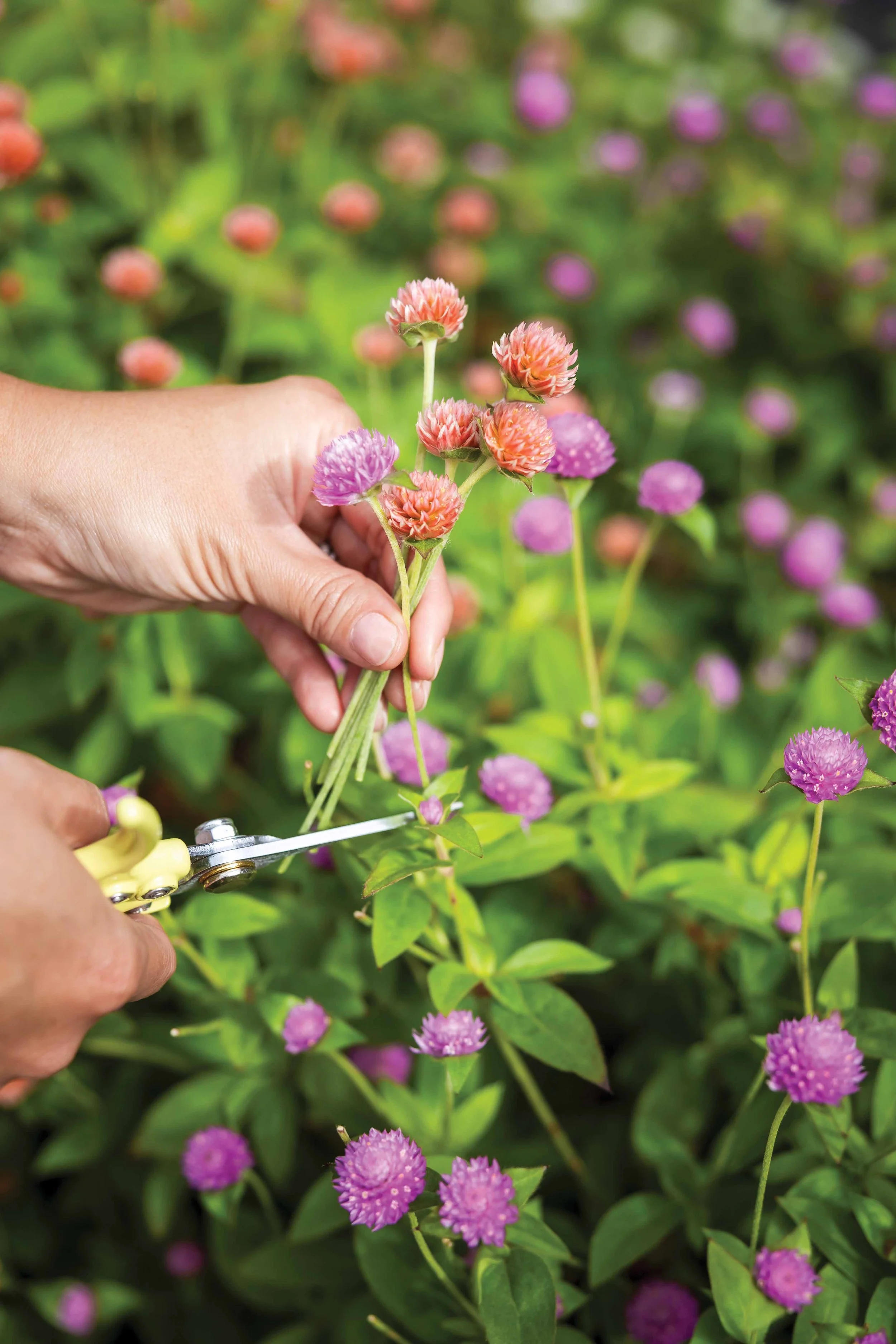
From embryonic cells to petals and stems, Jill Harunaga’s meticulous eye never wavered.
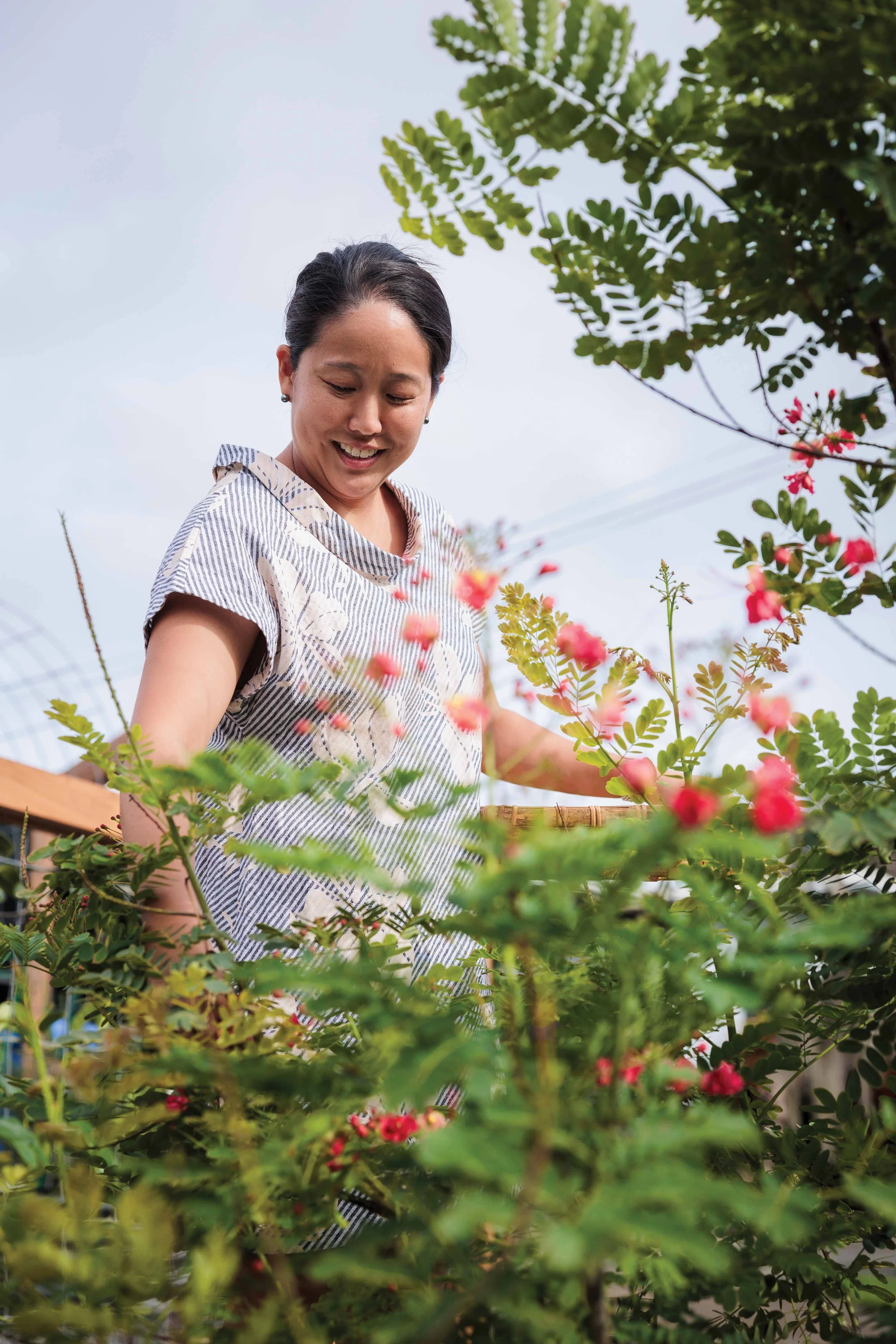
(All photos by Rae Huo.)
That same methodical mind simply found a new medium, and today, her scientific training shapes every lei she creates. “The most apt comparison is when I’m trying a new material to work,” she explains. “I have a step process I go through.” She tests longevity in the refrigerator, examines whether a blossom will hold when strung, and evaluates whether it stains fabric. When she encountered conflicting guidance on storing pua kenikeni — long believed not to refrigerate — she conducted her own experiments, testing blooms at various stages and temperatures. Her conclusion: a wine fridge preserves them beautifully, cool but not cold.
Rigor, it turns out, is the quiet engine beneath her modern aesthetic. “I very much do not do traditional lei,” Harunaga says. Rather, [“It’s] contemporary, unexpected, but still thoughtful and intentional and precise.”
Precision matters in every creation. Patterns are deliberate. Draped strands fall like jewelry, an accent flower rests intentionally close to the heart, and there is always a comfortable, non-pokey back section that lays along the back of the neck, a detail her daughters have happily helped her test.
During peak season — late spring to early summer encompassing May Day, Mother’s Day and graduations — orders can climb to 35-40 a week, a pace that keeps her on her toes. But for Harunaga, every commission is personal. Most clients give her basic information (color, flower, recipient, event), and trust her to run with it.
And what feeling does she hope to deliver with each finished product? “Oh, love. One hundred percent,” she says. “They thought about ordering ahead for you, they thought about what kind of flowers and look would fit you, they budgeted for it; you’re loved when you get a lei like that.”
In many ways, Stamen + Style still exudes the same work Harunaga fell in love with in her youth: observation, experimentation, growth. Only now her daughters are beside her, planting seeds, picking blossoms, and harvesting and delivering cucumbers to their teachers — the same small gesture of gratitude that started everything.
Stamen + Style lei are usually available at ISLAND-BOY shop and Olive Boutique, and Harunaga also hosts workshops at ISLAND-BOY. Stay inspired by her latest creations on Instagram @jharunaga.
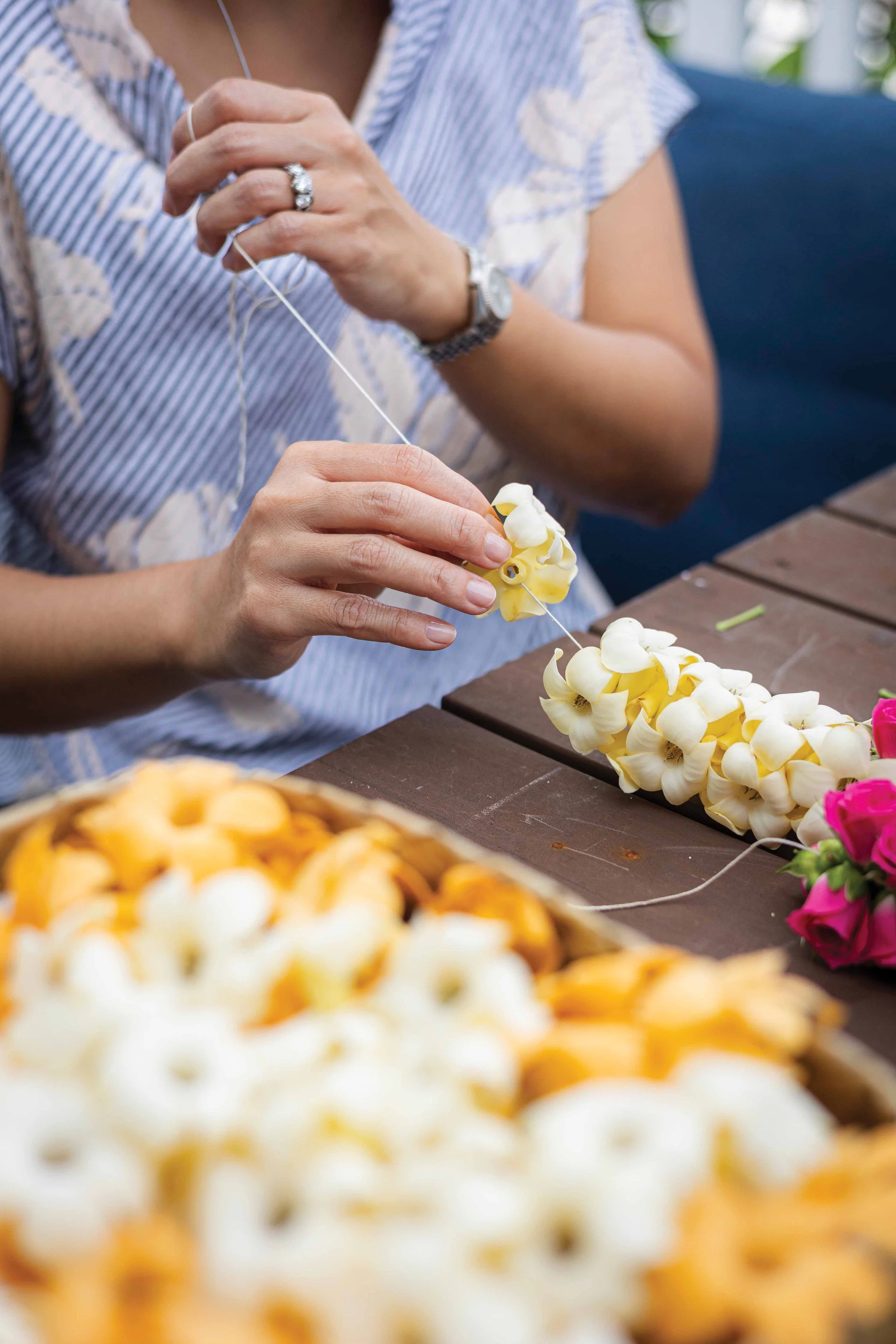
Both practical and creative, Harunaga’s method honors tradition while reimagining it — applying haku and lei po‘o principles to lei kūi and beyond.
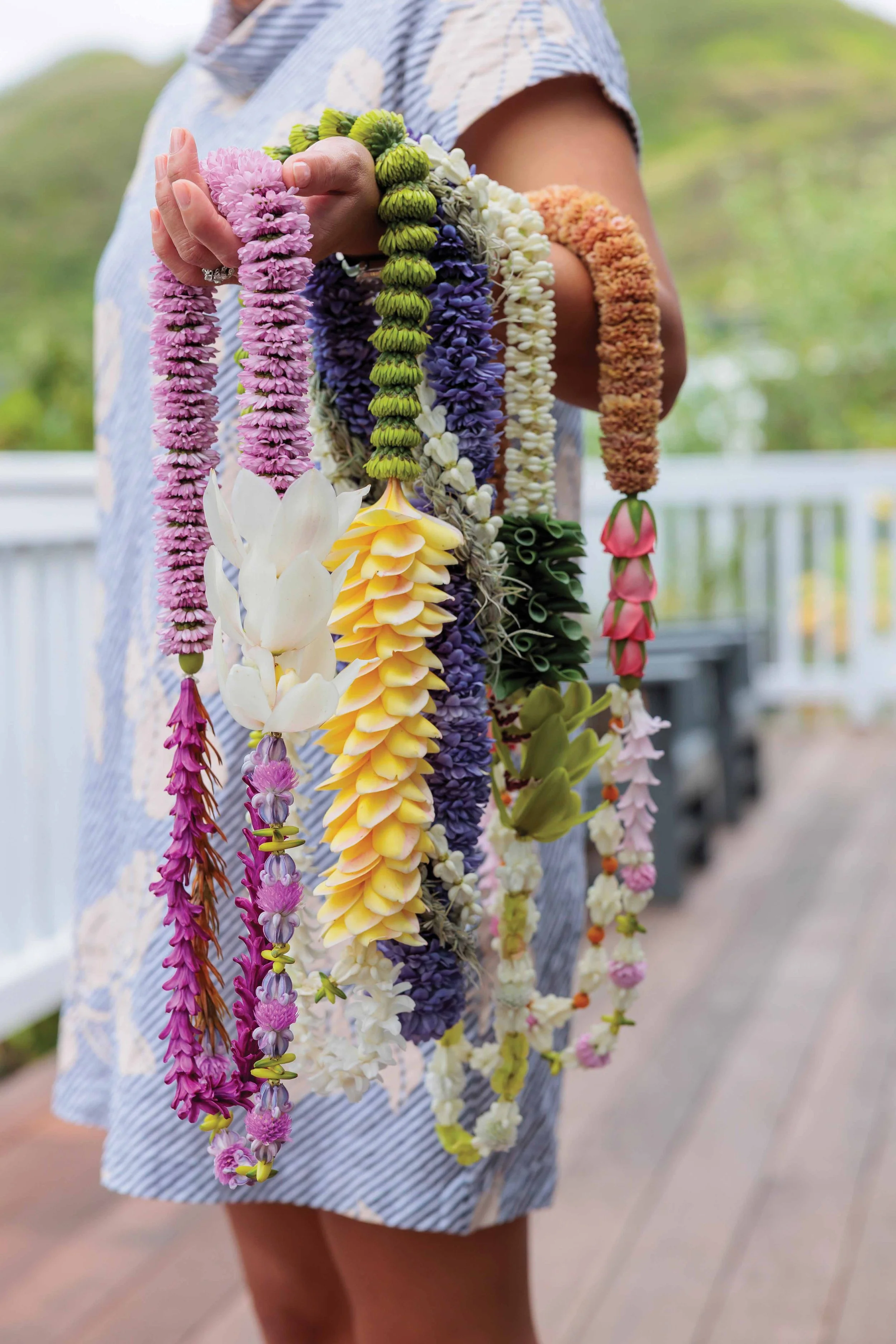
“It’s the intention behind the lei,” Harunaga says. “There’s a time and place for both the traditional and the nontraditional.”
(All photos by Rae Huo.)