
Keeping Company
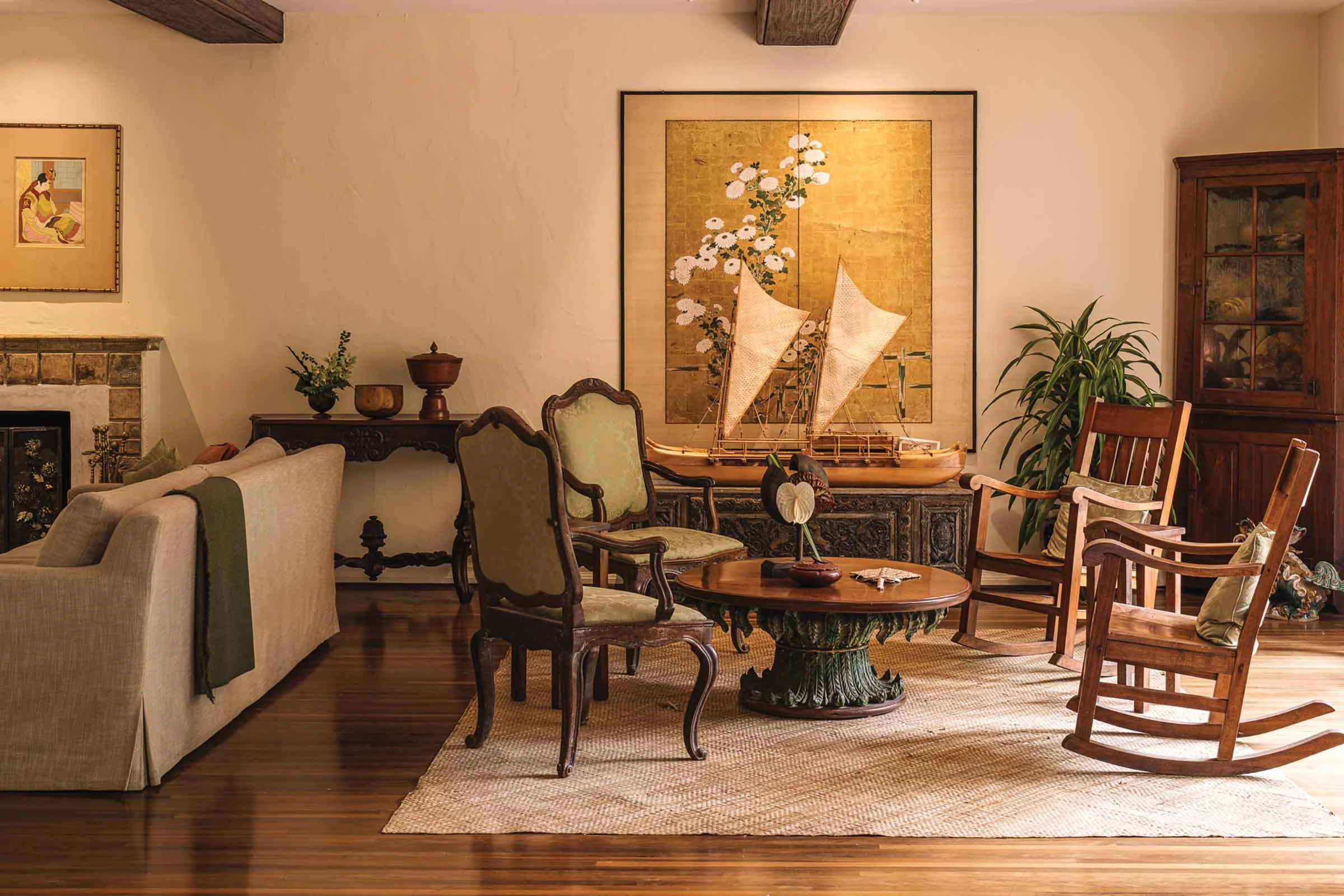
With a love of art, craftsmanship, and Hawaiian heritage, Mary Philpotts thoughtfully ensured her treasured heirlooms — including a hand-carved koa bed by her son Douglas — would remain with family members who cherished their stories.
(All photos courtesy Marion Philpotts-Miller.)
For Mary Philpotts, it was love at first sight.
“My mom took one step inside and went, I want it,” recalls her daughter, Marion Philpotts-Miller.
The house was ‘Āhuimanu, meaning “gathering of birds” in Hawaiian. A fitting name for this Nu‘uanu estate, where lush tropical gardens drew birds from throughout the valley. Designed in 1921 by prominent architect Hart Wood (who also designed the First Chinese Church of Christ and Spalding House, home to the former Contemporary Museum), ‘Āhuimanu showcased Wood’s regional approach to design, blending Western and Asian architectural forms with a sensitivity to Hawai‘i’s climate. Instead of separating house from landscape, Wood blurred the boundary between structure and surroundings.
Walk up the driveway and, almost before the building even comes into view, the garden unfolds in dense layers of greenery dotted with soft pink bromeliads and begonias. Monkeypod and strawberry guava trees form a shifting overhead canopy. Lacy palapalai fern fronds spread out across carpets of mondo grass underfoot. Weaving through the garden is an ‘auwai, an open irrigation channel carrying water. An old stone path on the other side of the home leads to Nu‘uanu Stream, where the garden gives way to a tropical forest of bamboo, monstera, and natural ponds.
At the time, the property was just coming onto the market. Mary Philpotts sold two houses to purchase ‘Āhuimanu. It would become her sanctuary for the rest of her life.
“It really was a beautiful romance, if you could have a romance with a home,” says Philpotts-Miller. “She respected every part of the architecture but was able to make it hers.”
And she did. Over the next several decades, ‘Āhuimanu became a living archive of Mary’s tastes, travels, and friendships. Vintage ‘ukulele could be found balanced above cabinets or tucked alongside antique furniture. Heirloom calabashes shared shelf space with bowls made by friends. Paintings by Pegge Hopper, Madge Tennent, and John Kelly hung near books on Hawaiian history alongside stacks of various curios that Mary collected over the years.
“She wasn’t afraid to mix things,” Philpotts-Miller says. “Everywhere [in the home] has a little bit of the unexpected.”
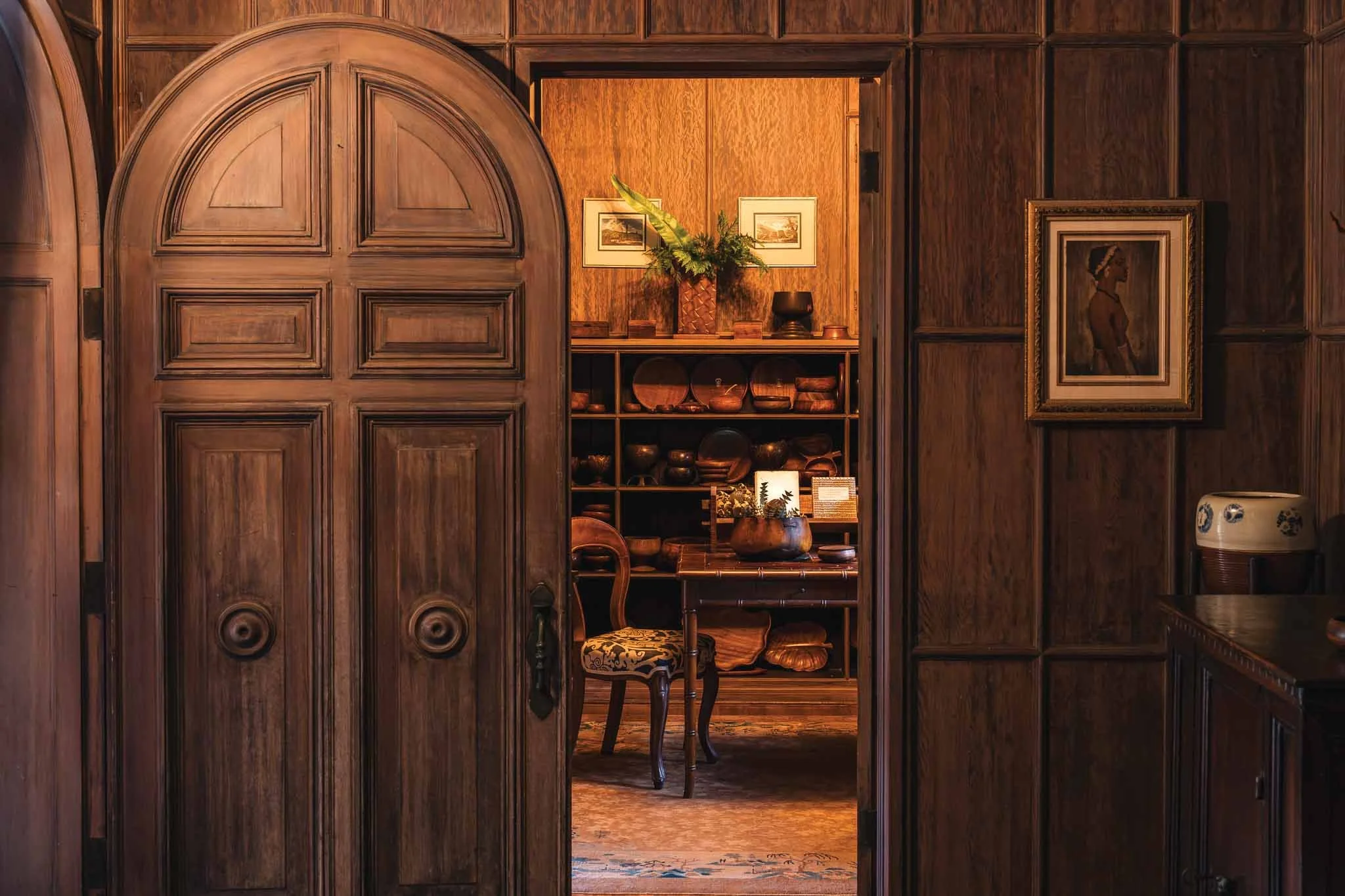
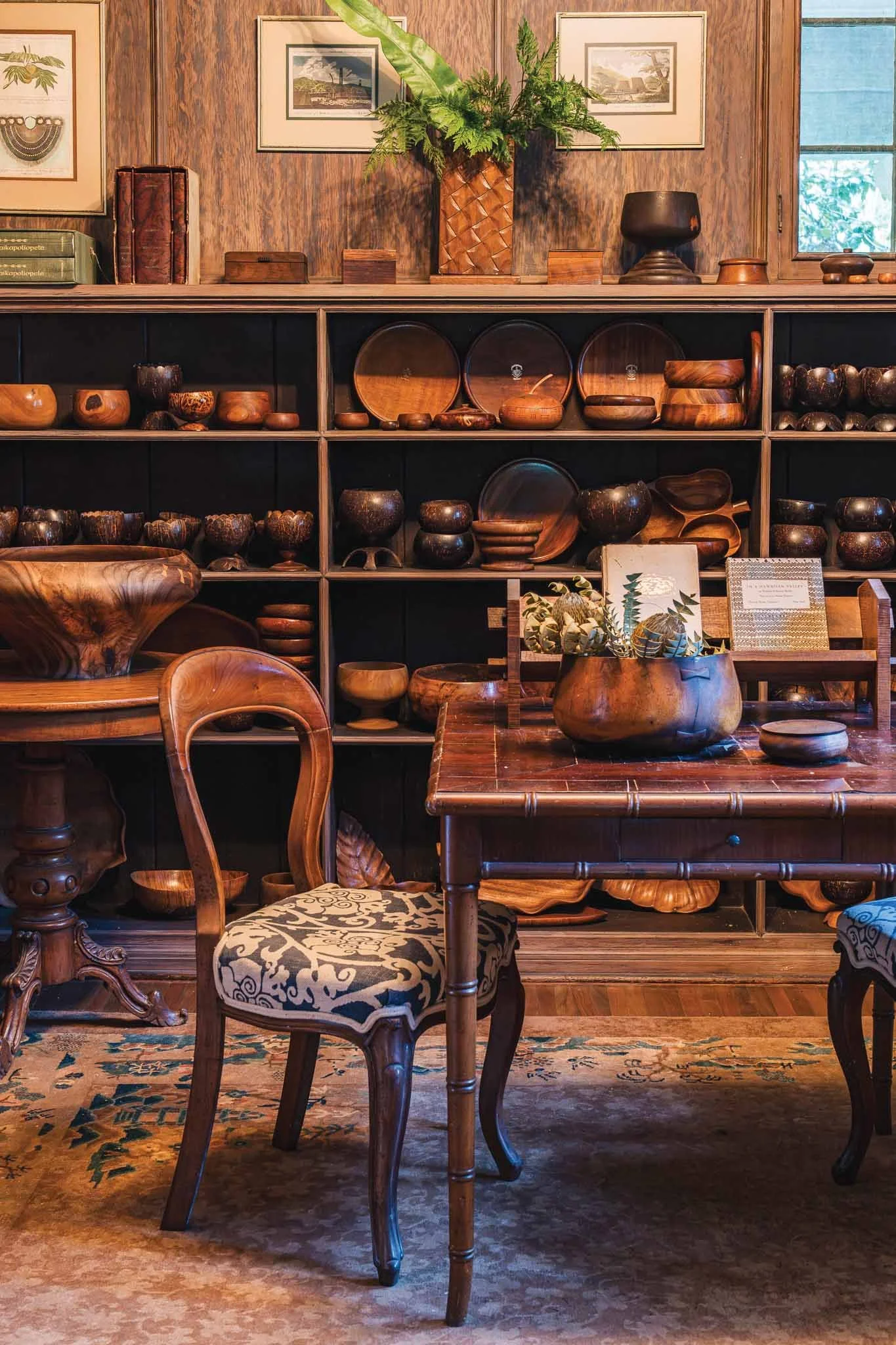
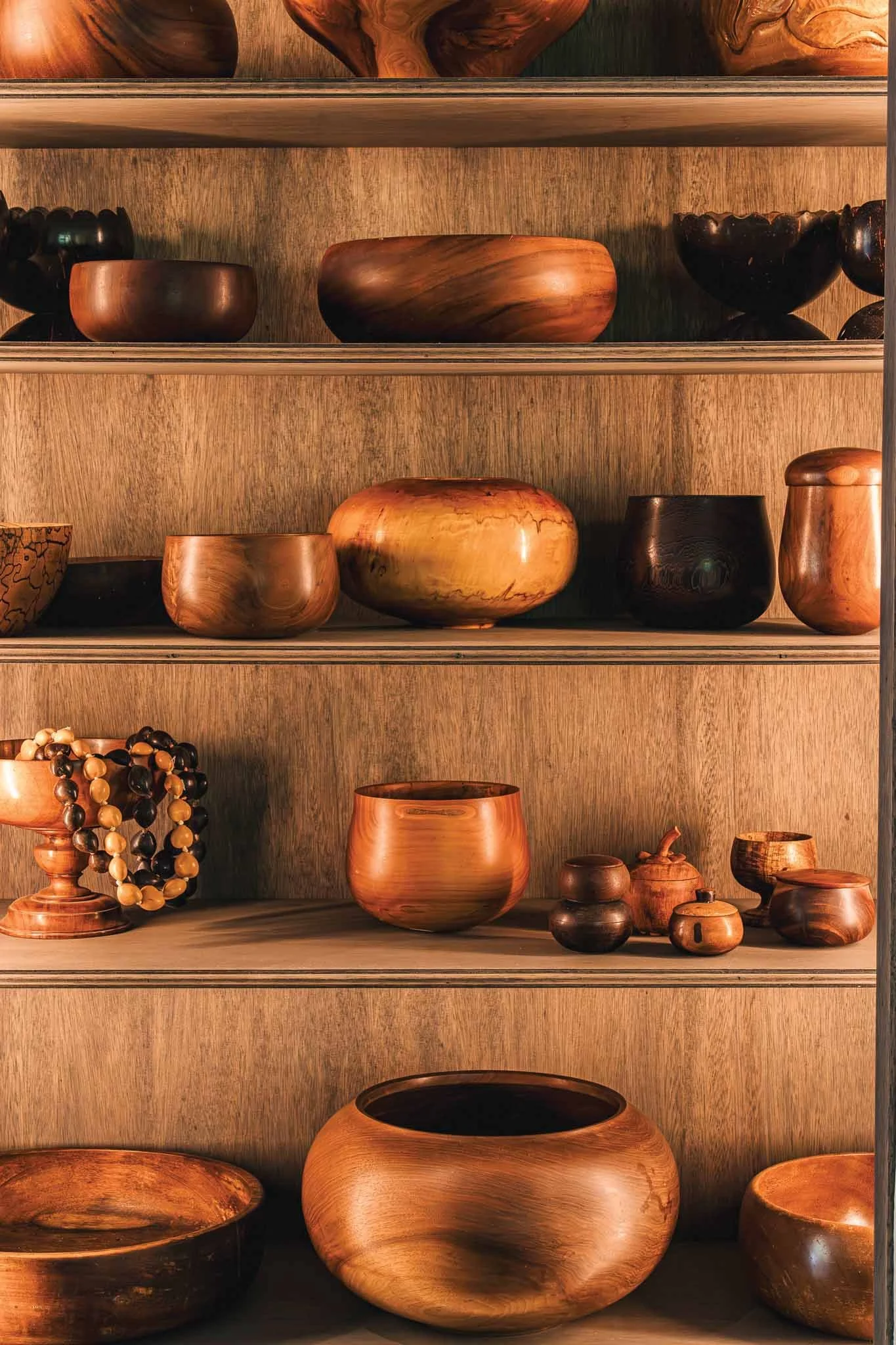
Just beyond the entryway, a former doctor’s office was transformed into Mary Philpotts’ beloved bowl room, where a collection of handcrafted vessels reflected a lifetime of hospitality and gathering. For Mary, every bowl told a story, reflecting a lifelong tradition of hospitality and connection.
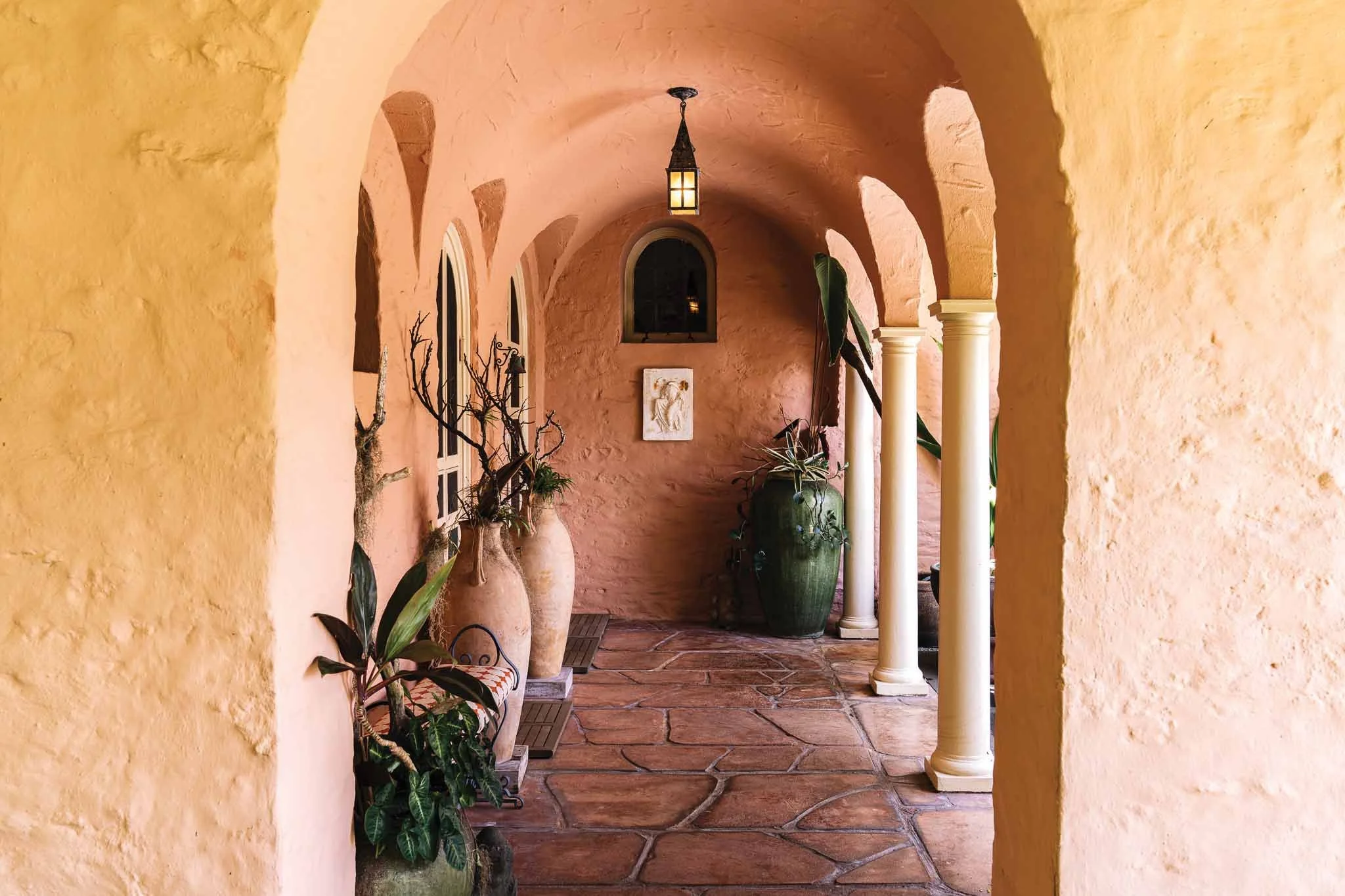
(All photos courtesy Marion Philpotts-Miller.)
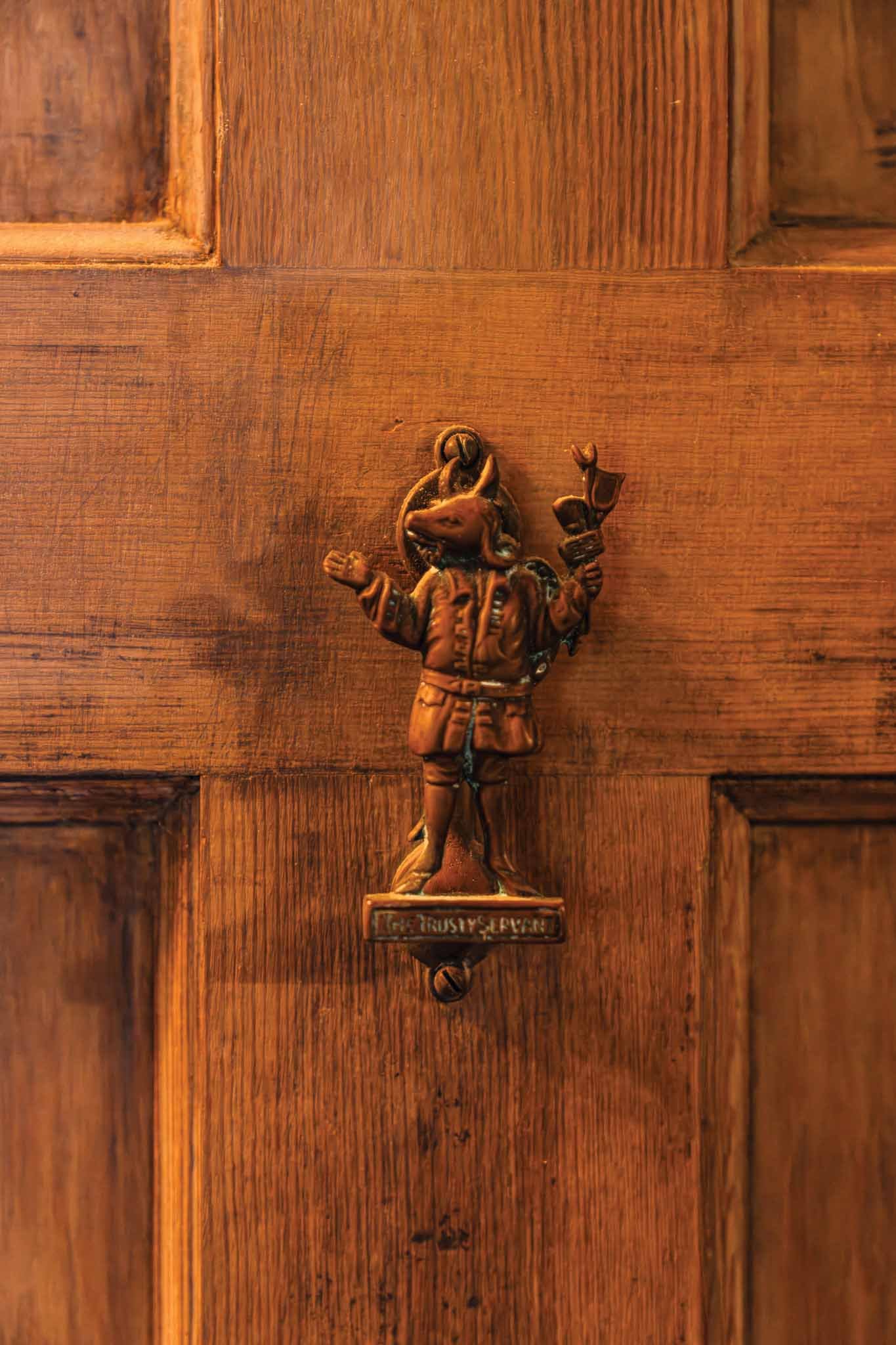
One of the home’s quirks sat just off the entryway: two front doors, a remnant from the years when ‘Āhuimanu belonged to Dr. G. M. Van Poole, a retired Army Medical Corps colonel and physician who later operated his medical practice from the house. Van Poole’s former office eventually became Philpotts’ bowl room, lined with gourds, ‘ulu bowls, lū‘au-style coconut bowls, ceramics, and other vessels in rich colors ranging from light caramel to mahogany. More than simply decorative objects, these pieces regularly found their way onto tables during dinner parties and gatherings.
“People would give [Mary] bowls when they’d stay with her. So she’d have these Hawaiian calabash bowls, then there might also be a bowl from Ireland in the mix,” says Philpotts-Miller. “The calabash was the symbol of hospitality and one element we all cherished.”
Mary Philpotts’ home was refined yet unpretentious. She had an educated eye for craftsmanship and fine material, but also a love for fun pieces that could interrupt the seriousness of a room. Everywhere seemed to have another small surprise, from whimsical lamps to kitschy bamboo chairs to retro hula figurines.
“Would I have normally put this in my home? Probably not. Do I love it? Yes,” Philpotts-Miller says.
Thanks to moveable furniture — for example, folding Gump’s Hawai‘i tables that could open unexpectedly for dinner parties — ‘Āhuimanu could expand and contract depending on the occasion. Which was perfect because there were always people in the home. Mary entertained constantly: “She was a party girl.” Holiday meals could stretch to 30 or 40 guests without fuss. Fundraisers spilled through the dining room; clients often stayed overnight. Artists gathered in the basement around Mary’s printing press while friends cooked upstairs, or lounged on a daybed nearby. (“Who puts a pune‘e in their kitchen?” Philpotts-Miller wonders with a laugh.)
“Parties were beyond fun. They were full of music, laughter, and multigeneral family, friends, and neighbors,” says Philpotts-Miller.
“A couple of Christmas Eves, we hired a bagpiper to escort us in a parade from our father and stepmother’s home to my mother’s [home] to our home and so on. Libations and pūpū to Christmas Eve dinner to dessert next door, we simply wandered through a gate at the hedge between two properties…”
Creative energy shaped the house nearly as much as the furniture. Mary’s love of making art extended beyond collecting. She gardened, painted, and collaborated with local artists and designers.
“You’d go over on a Saturday and there’d be Kathy Merrill, a design friend, and Doug Tolentino, who’s also a singer, and they’d play music for hours,” Philpotts-Miller recalls.
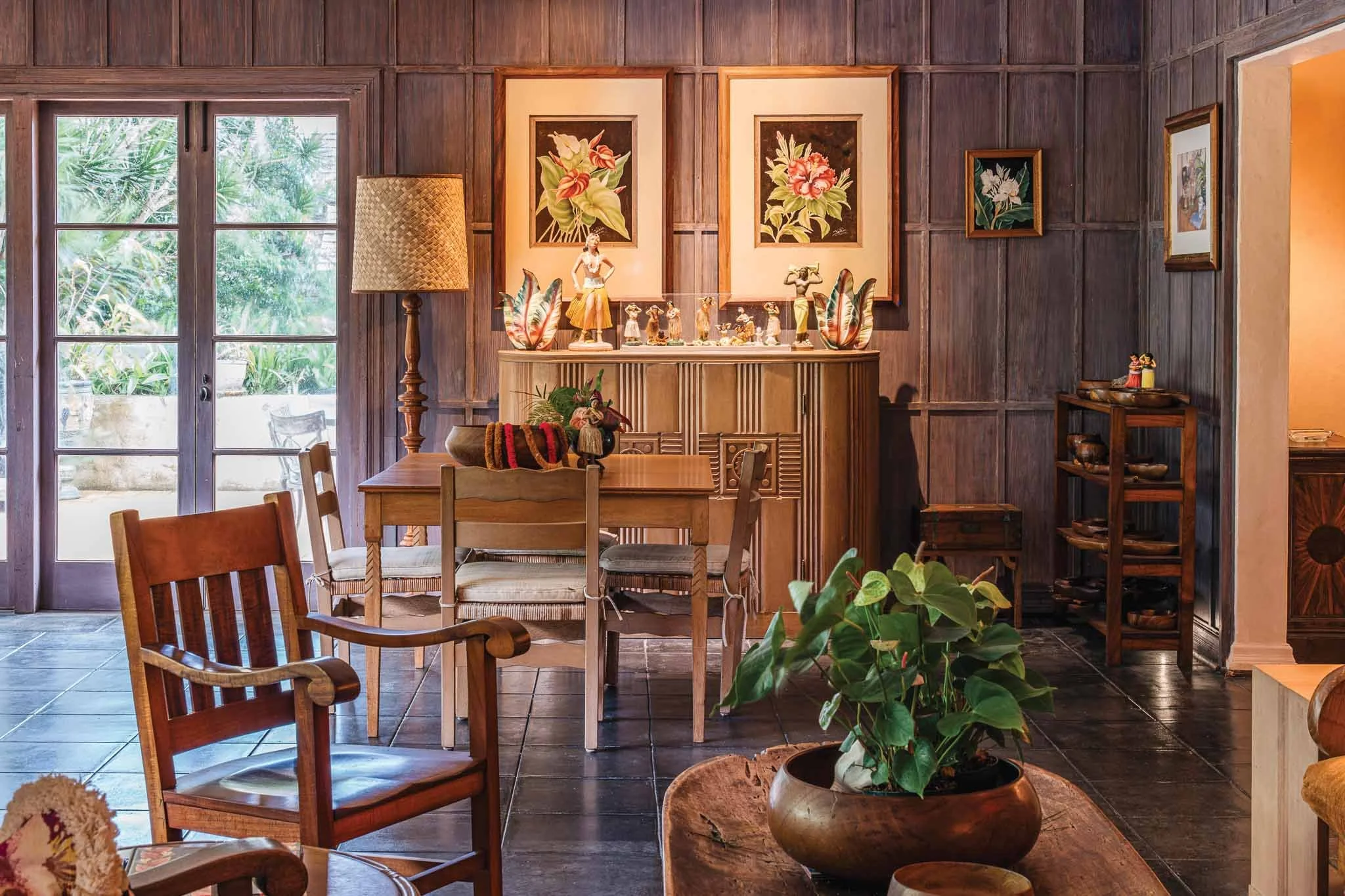
“Parties were beyond fun. They were full of music, laughter, and multigenerational family, friends and neighbors…”
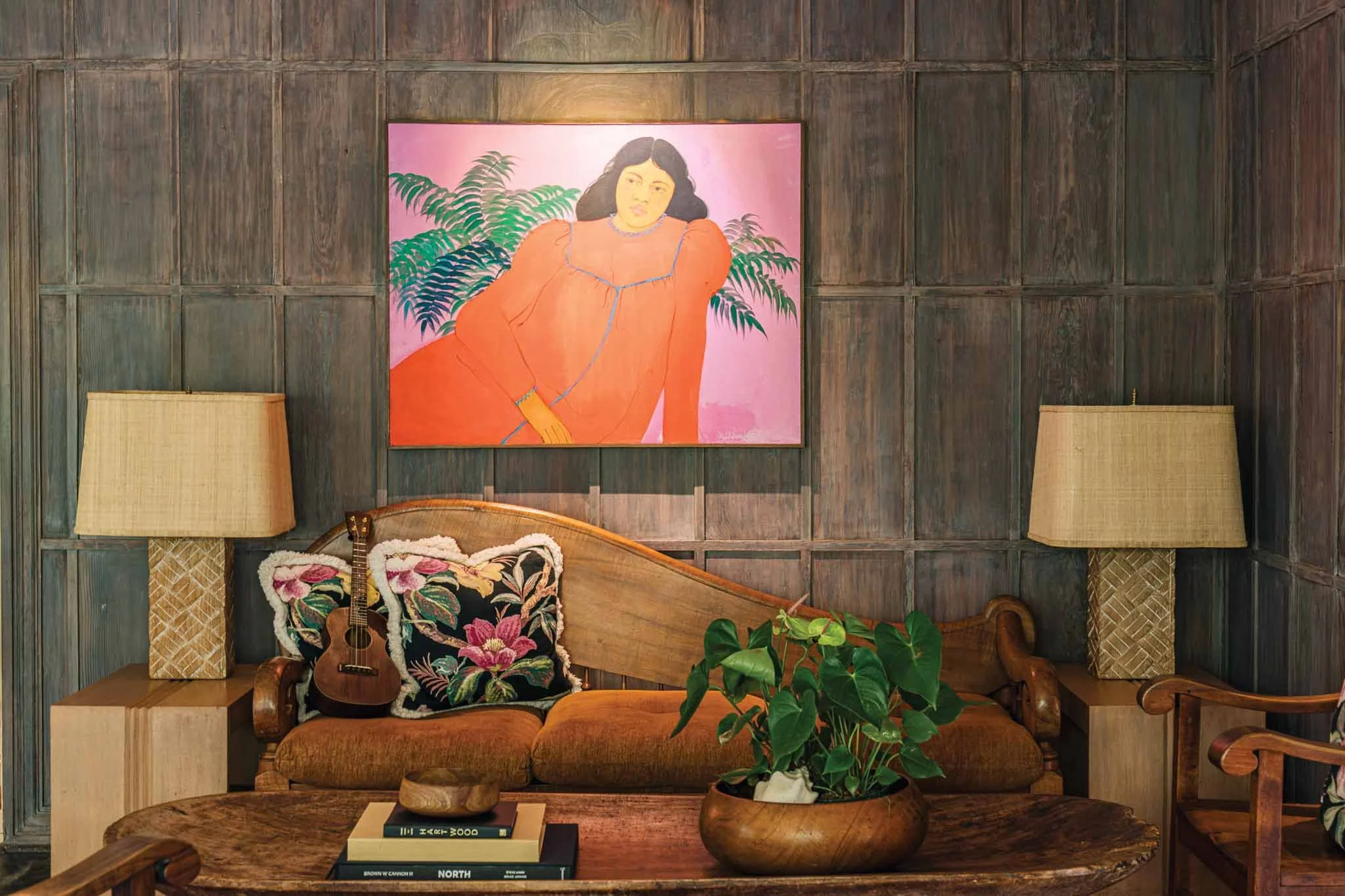
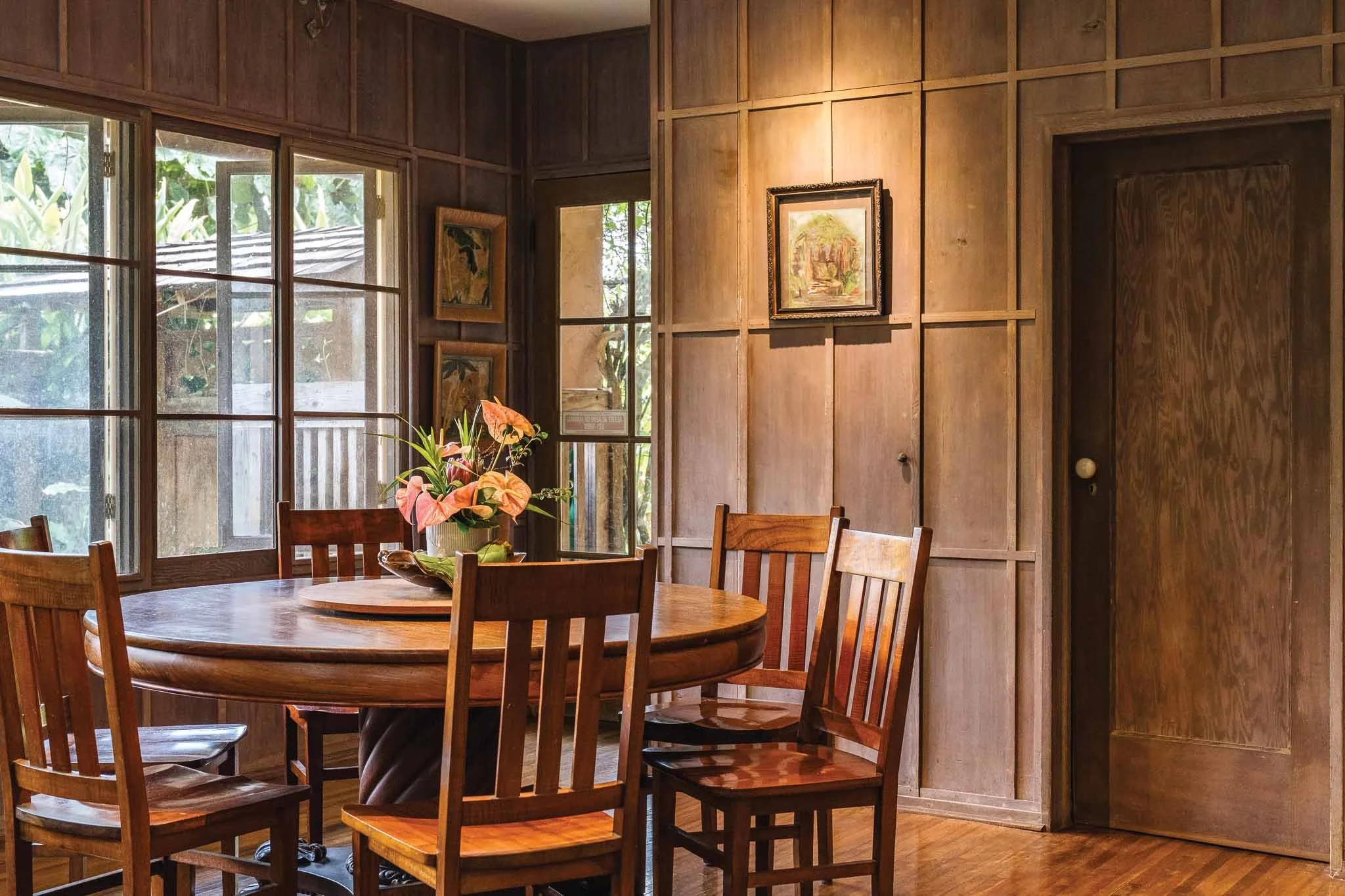
(All photos courtesy Marion Philpotts-Miller.)
Mary’s creativity was passed down to Marion, who followed her mother into design while still developing a distinctly different visual language of her own. Returning to Hawai‘i after years working in San Francisco, Philpotts-Miller initially resisted many of the island design vernaculars she had grown up around. “I was like, ‘Oh my god, raffia wallpaper? Really?” she laughs.
Over time, certain values remained foundational: art, local craftsmanship, and Hawaiian history. Before Mary Philpotts passed away in 2023, she had carefully documented where many of her belongings would go, ensuring that treasured pieces would continue their lives with family members who understood their stories. For example, an elaborately carved Koa bed built by Marion’s brother, Douglas Philpotts, found its way back to him.
For Marion, she received a pair of regal torchiere floor lamps with a textured pattern that are reminiscent of kāhili, traditional Hawaiian royal feather stands, as well as a collection of folding tables and pieces dating back to the Gump’s Hawai‘i era. Among them is a table believed to be by designer Walter Lamb, who became known for making furniture using naval brass tubing salvaged from sunken battleships at Pearl Harbor.
Mary Philpotts’ legacy now extends to a third generation. When Marion Philpotts-Miller recently texted her daughter to ask what she was up to, back came a photo of paints, stamps, and rice paper spread across a table—Mary’s old art supplies, finding new life creating fresh works of art.
Marion was surprised, and touched. “Sometimes you don’t realize how much of what you model carries on.”
(All photos courtesy Marion Philpotts-Miller.)