
Going Prone
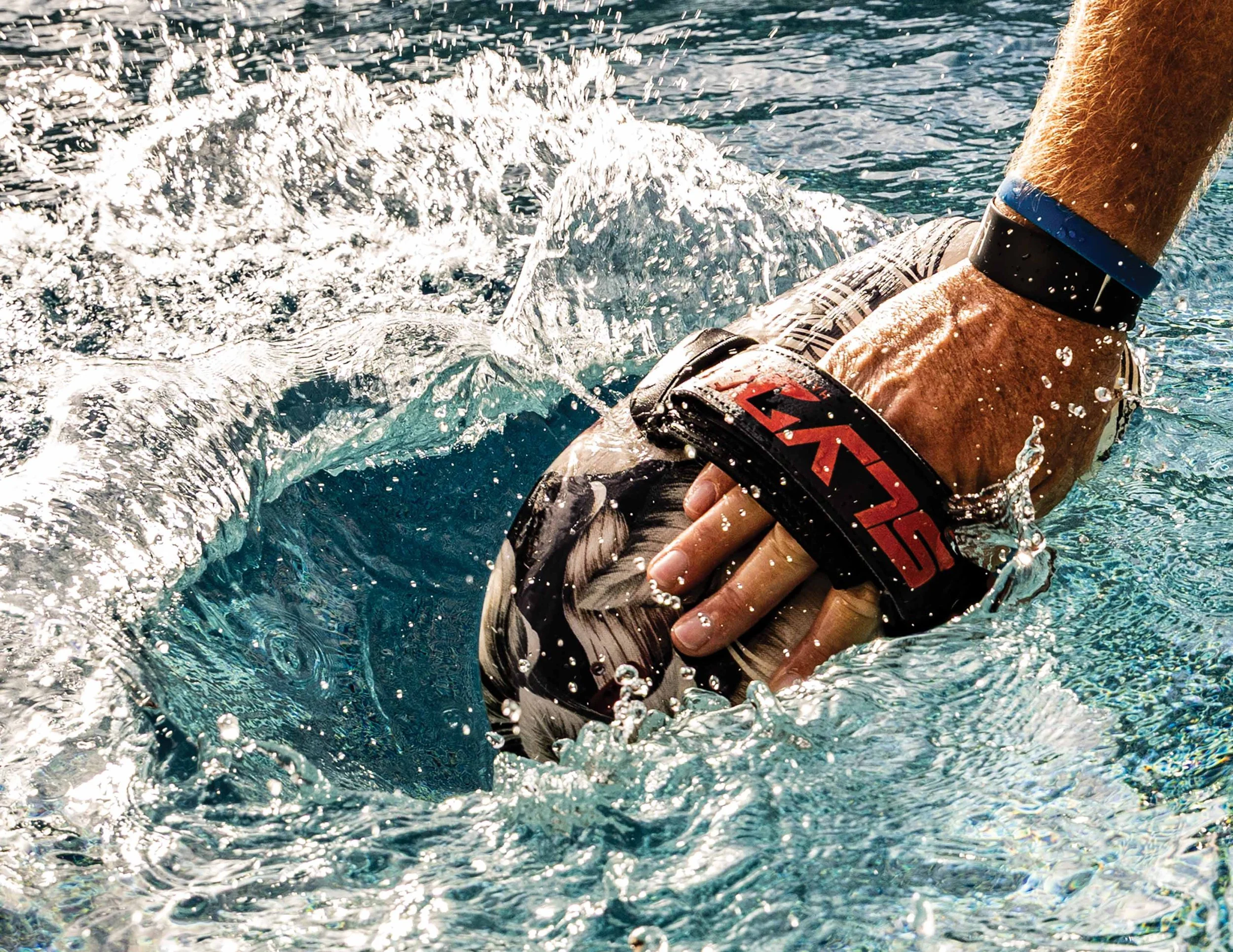
What paipo boards lack in stability, they make up for in speed: Before foils, paipo riders were the fastest people in the surf.
(Photos by Brandon Miyagi.)
Fifteen years ago, when Heath Hollenbeck moved from Nebraska to Hawai‘i for work in IT, he started out surfing, skimboarding, stand-up paddling—anything that wouldn’t punish his ruined knees. Basketball had been his game. But all the high-impact jumping and other cartilage-grinding movements had finally caught up with him. By the time Hollenbeck turned 40, standing up on a surfboard was agony.
He started going prone instead, bodyboarding at Waikīkī Beach on small waves, happy enough just not to wince every time he tried to pop to his feet. One day, Hollenbeck saw a local guy in his 60s cutting through the surf. The man was riding a board no thicker than a magazine and going faster than anyone else in the water.
“He was always at Walls or Mākaha, sometimes Makapu‘u… I’d see him just bombing down the line,” Hollenbeck says. “I remember thinking: I want to go that fast.”
The man was “Uncle” Harry Akisada, a legendary waterman and master of paipo surfing, the art of riding small wooden boards while lying prone on the waves (sometimes considered the ancestor of modern bodyboarding). Akisada’s board was thin, maybe half an inch, made of wood and required a strange combination of strength and finesse. Hollenbeck had never seen anything like it.
“Paipo riding is almost like bodysurfing on steroids,” says Hollenbeck. “On a bodyboard, you let the whitewash take you or you paddle into the wave from on top. With paipo, the board is out in front of you because it won’t hold your body weight. When a wave comes, you slide up onto the board. It’s kind of like riding a bike; the board has to be moving or you’ll fall over.”
What paipo boards lack in stability, they make up for in speed: Before foils, paipo riders were the fastest people in the surf. When Hollenbeck tried a paipo himself, his Apple Watch clocked him at more than 25 miles per hour. (Akisada, he suspects, was faster.)
Soon, Hollenbeck’s biggest issue in the water went from finding a sport he could still do to locating a paipo board of his own. “They’re hard to find,” Hollenbeck says. “You have to know someone who’s still shaping them. Or get one off Craigslist or Facebook Marketplace and see what kind of condition it’s in.” Eventually, he connected with Hawai‘i Paipo Designs, a Big Island maker now long retired. He picked up a fiberglass model and one spare board as a backup.
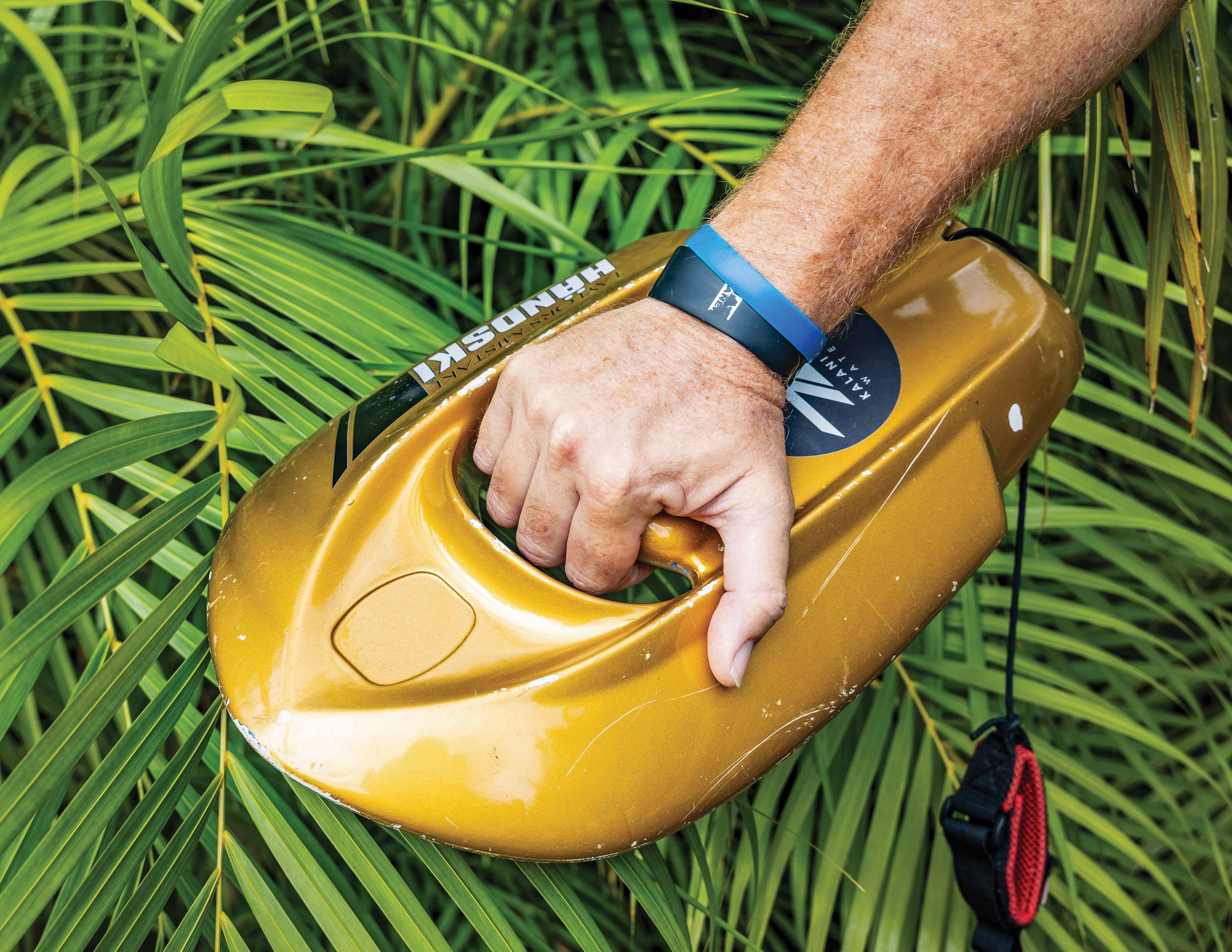
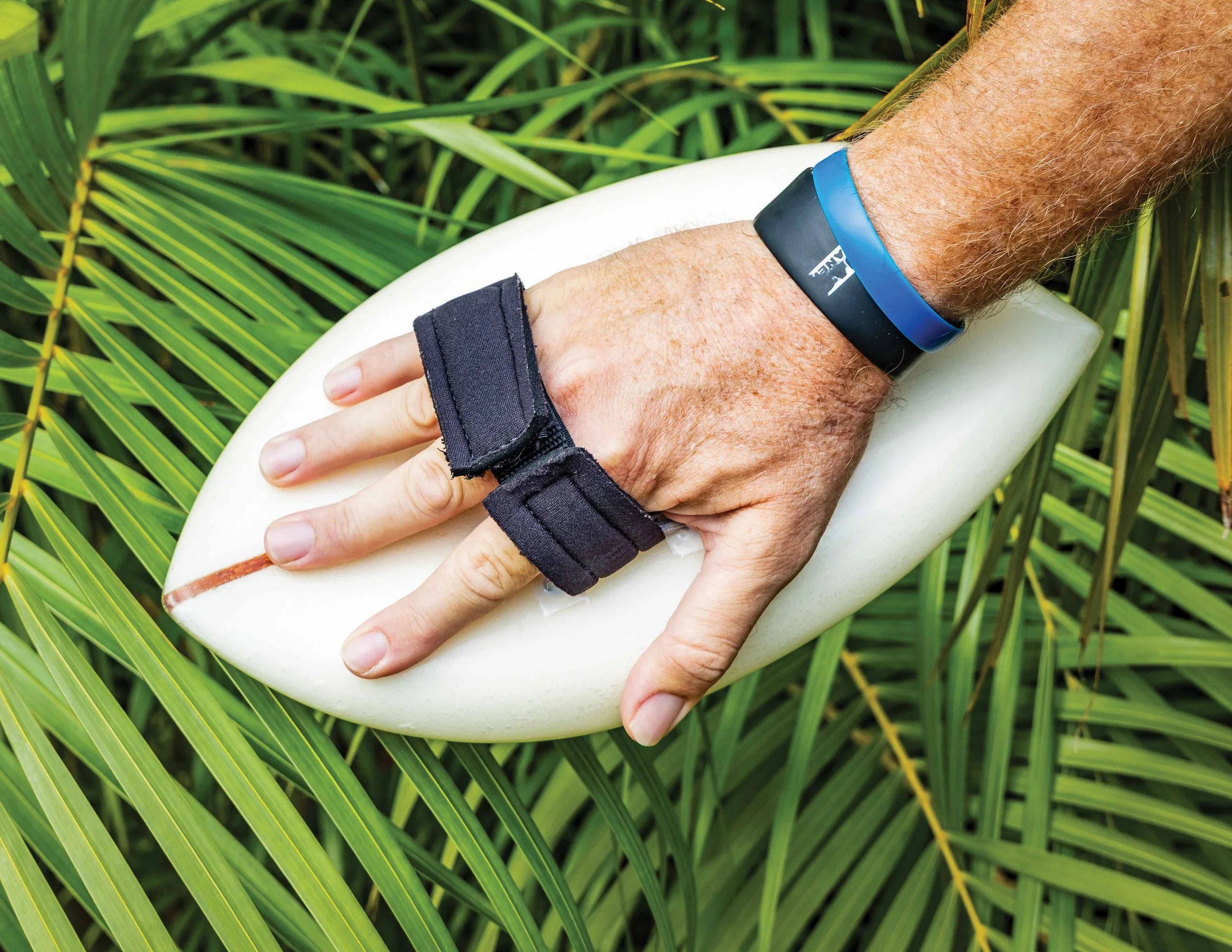
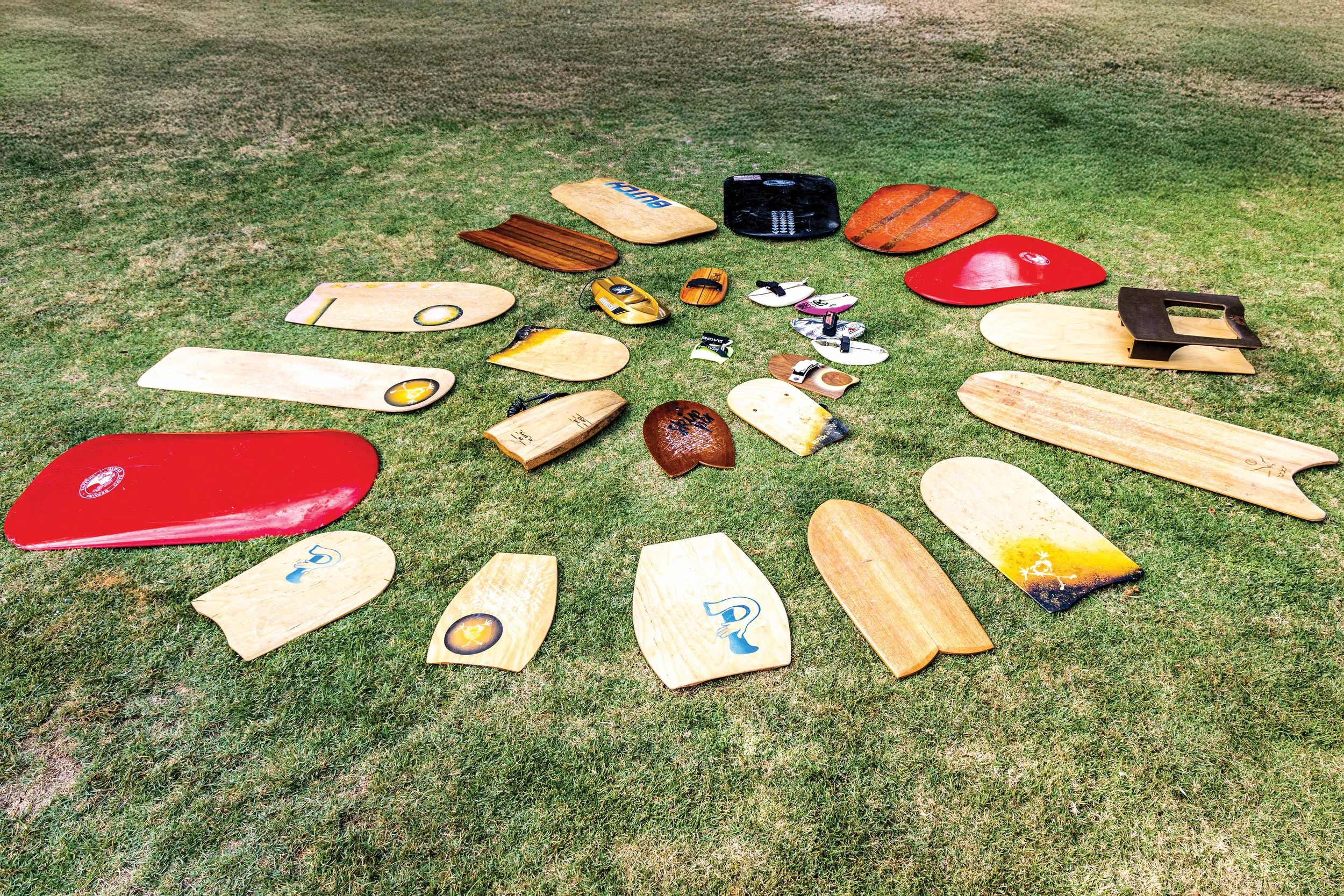
“It was never meant to become a collection,” says Hollenbeck, though he now keeps more than 25 boards at home in Niu Valley. While a regular surfer might have half a dozen boards at home, paipo riders can keep them by the trunkful. They’re small enough to stash everywhere and cheap enough—at least, compared to a thousand-dollar longboard—to justify an extra one for a particular beach or swell.
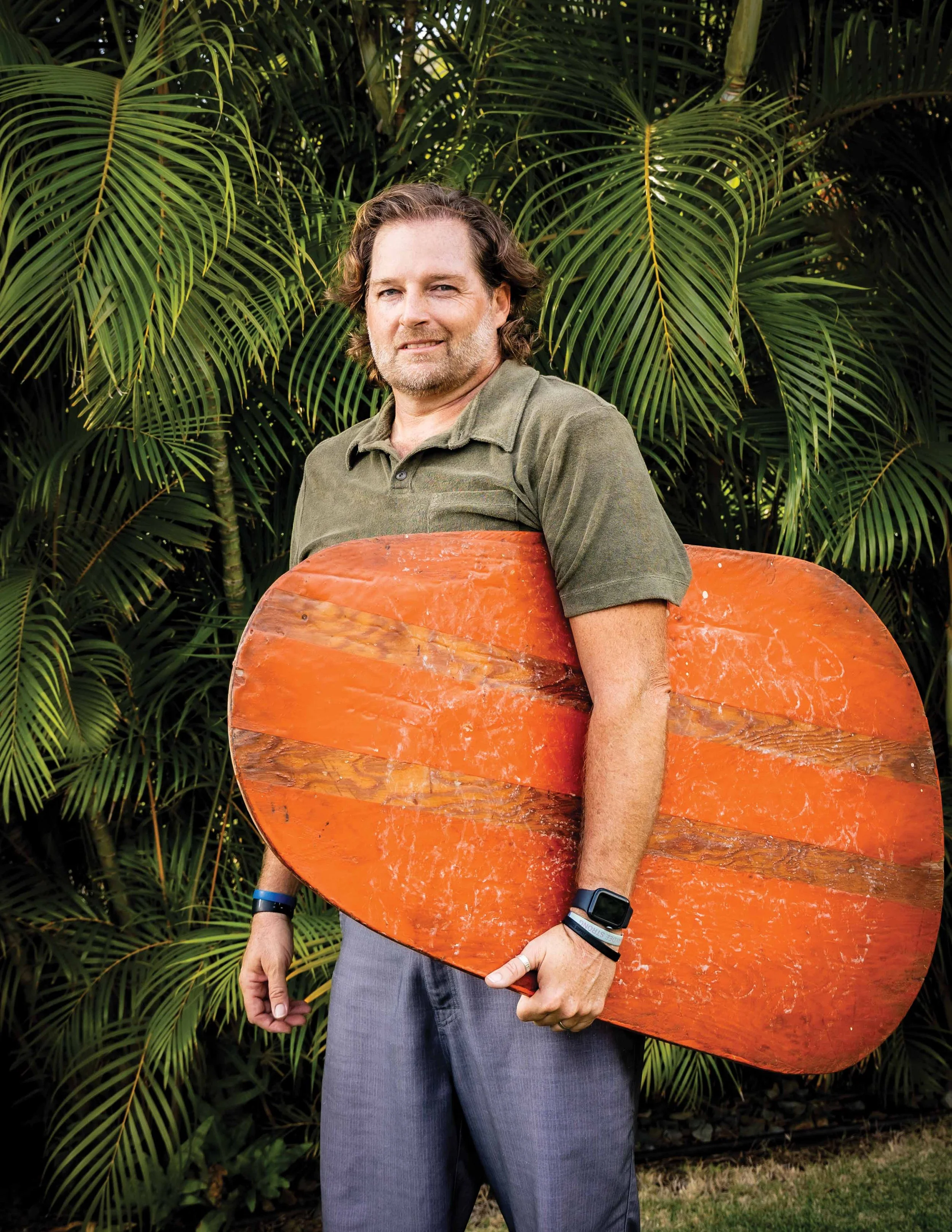
Hollenbeck has a 48-inch paipo perfect for gliding on days with smallish waves. He has short, spoon-shaped boards for speed and 360s. Wooden ones with flex. An old-school one that dates back to the early 1960s. A carbon fiber board shaped by the North Shore’s John Galera, a paipo pro for close to 50 years. A repurposed bookshelf that someone shaved down into the perfect size to catch waves.
“Different day, different board,” Hollenbeck says. Every one of them has been in the ocean within the past year (save for the bookshelf, now soft with age and too likely to split down the center). Paipo boards have allowed Hollenbeck to catch as high as 20-foot waves at Waimea Bay. The lightweight boards are easier than regular surfboards to paddle out with. Besides, their thin shapes let Hollenbeck duck dive easily and slip under waves if he misses a barrel.
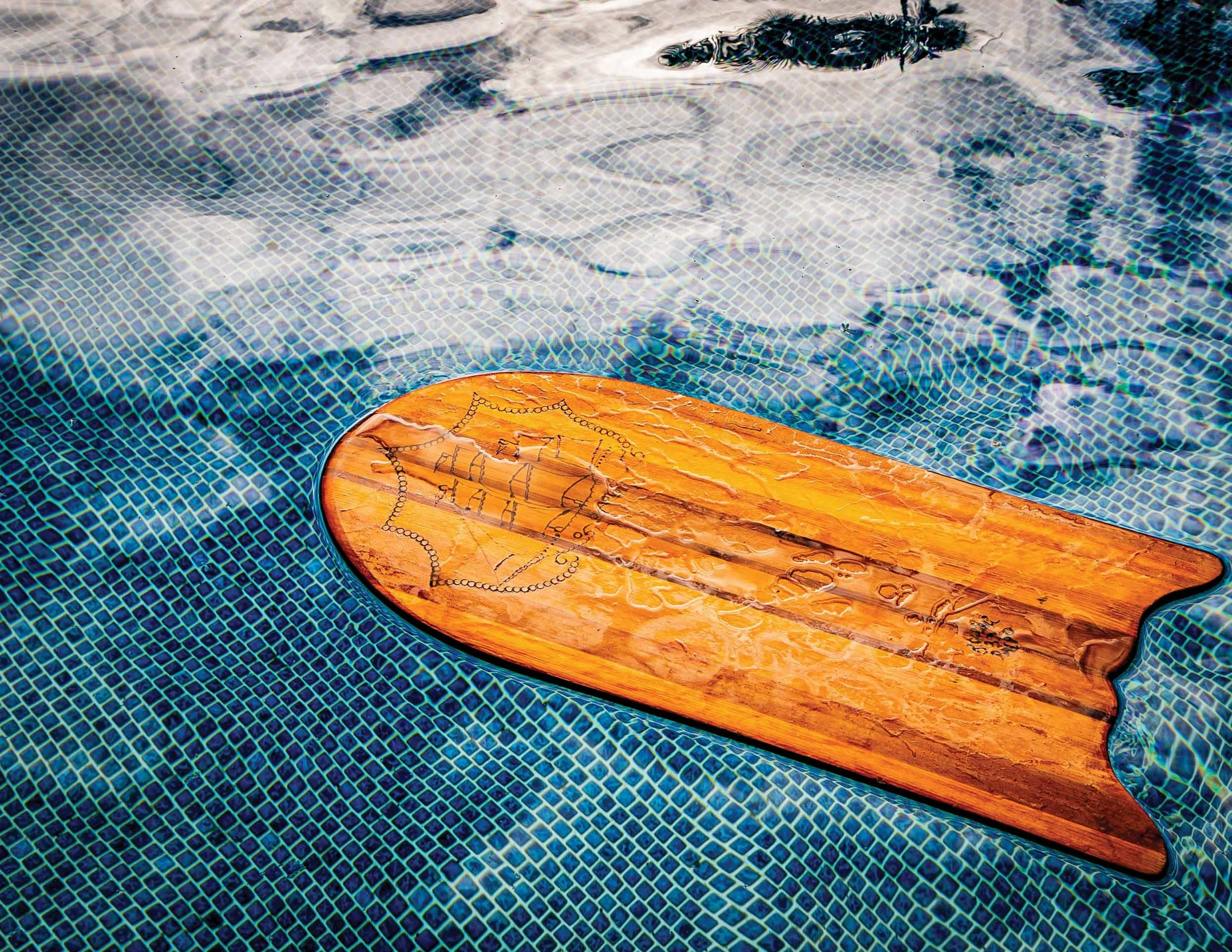
Hollenbeck’s paipo lineup is refreshingly eclectic, from a 48-inch board for mellow days and short spoon shapes made for speed and spins to wooden boards with plenty of flex.
(Photos by Brandon Miyagi.)
The sport isn’t without its risks. Hollenbeck rides Superman-style: arms forward and back, belly locked into the board’s scoop. He’s moving fast. However, if his board pearls, if the nose catches too much water, it can shoot forward like a missile.
“One of the dangers is you’re pushing the board really far,” says Hollenbeck. “Recently I was riding and got ahead of the board … it came back over the lip and hit me in the back of the head as I was body surfing. They pierce the water very fast; I had to get six staples.”
Still, Hollenbeck keeps riding. Paipo gives him longevity, something Hollenbeck thought he’d lost after his basketball days. (“There are 75-year olds paipo surfing so I’ve still got a minute,” he figures.) The sport also connects him to something simpler, a way to navigate the water without complicated equipment or new technology.
“You don’t need to have the fanciest things to enjoy the ocean. A new piece of foam can tackle big waves and have as much performance as a piece of wood that’s been ridden in the Islands for decades,” says Hollenbeck. “They say some of the earliest Paipo riders might have been from 2,000 years ago. There’s something about this way of surfing that’s pure. It’s like nothing else.”
(Photos by Brandon Miyagi.)