
Second Nature
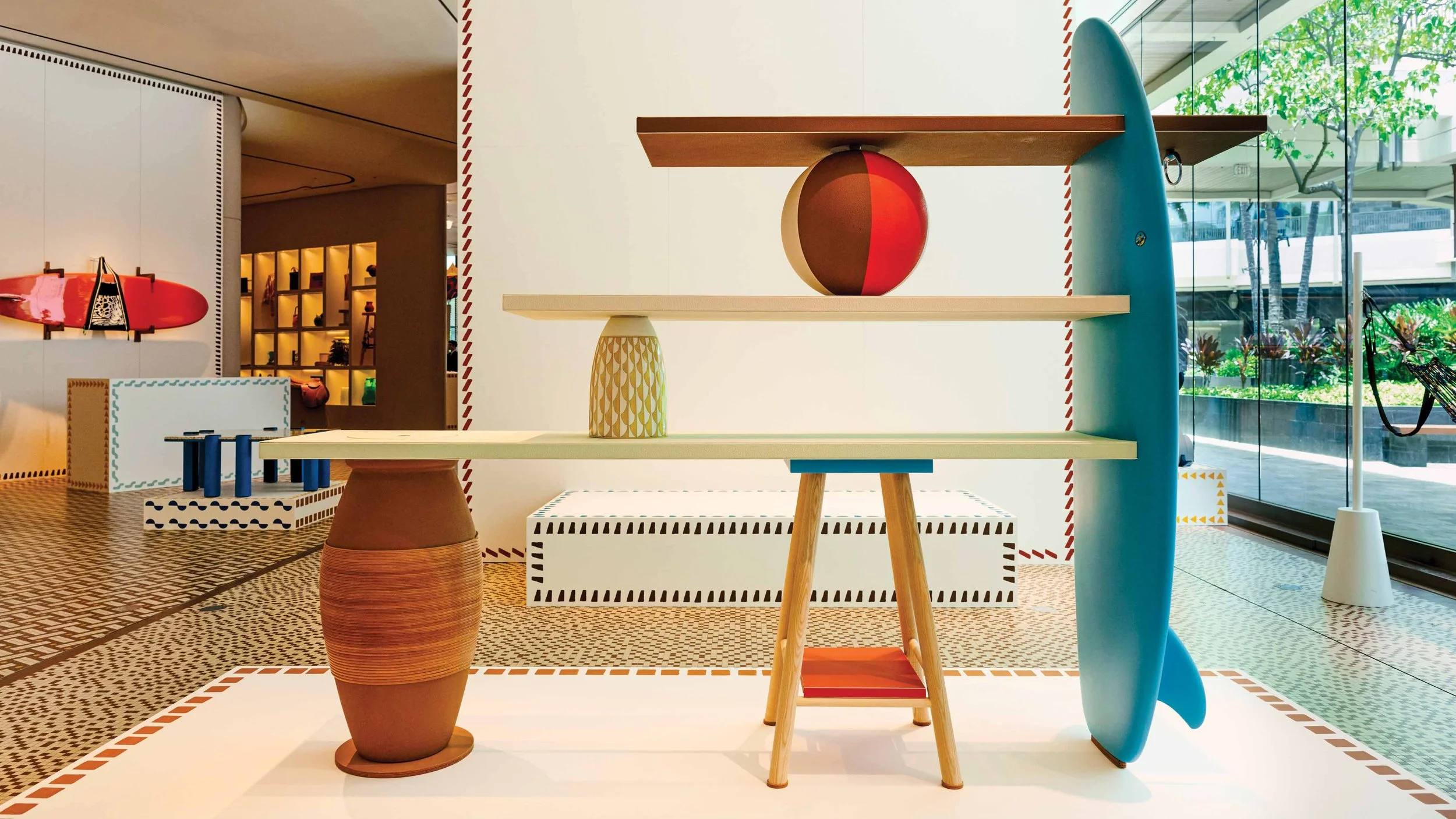
Nothing goes to waste at Hermès’ petit h, where leftover leather, silk, porcelain, and other materials are transformed into objects that blur the line between art, design and utility.
(All photos courtesy Hermès.)
This past August, Hermès’ Ala Moana boutique became a wonderfully curious world. A wicker basket rolled along on skateboard wheels. Oversized banana and pear poufs took shape in patchworked leather, while a horse-shaped shelf paired leather-clad maple with a delicate crystal bud vase. Nearby, porcelain tableware — broken into fragments and pieced together again — found new life as a mosaic table.
Surrounding it all were colorful geometric paper panels imagined by Hawai‘i artist Marques Hanalei Marzan, their patterns drawing inspiration from local culture and creating a distinctly Hawai‘i setting for the arrival of petit h, Hermès’ unconventional métier devoted to transforming the house’s dormant materials into something unexpected.
On hand for the opening were Godefroy de Virieu, Creative Director of petit h, and Diane Mahady, President and CEO of Hermès Americas. For Mahady, the choice of Honolulu was purposeful.
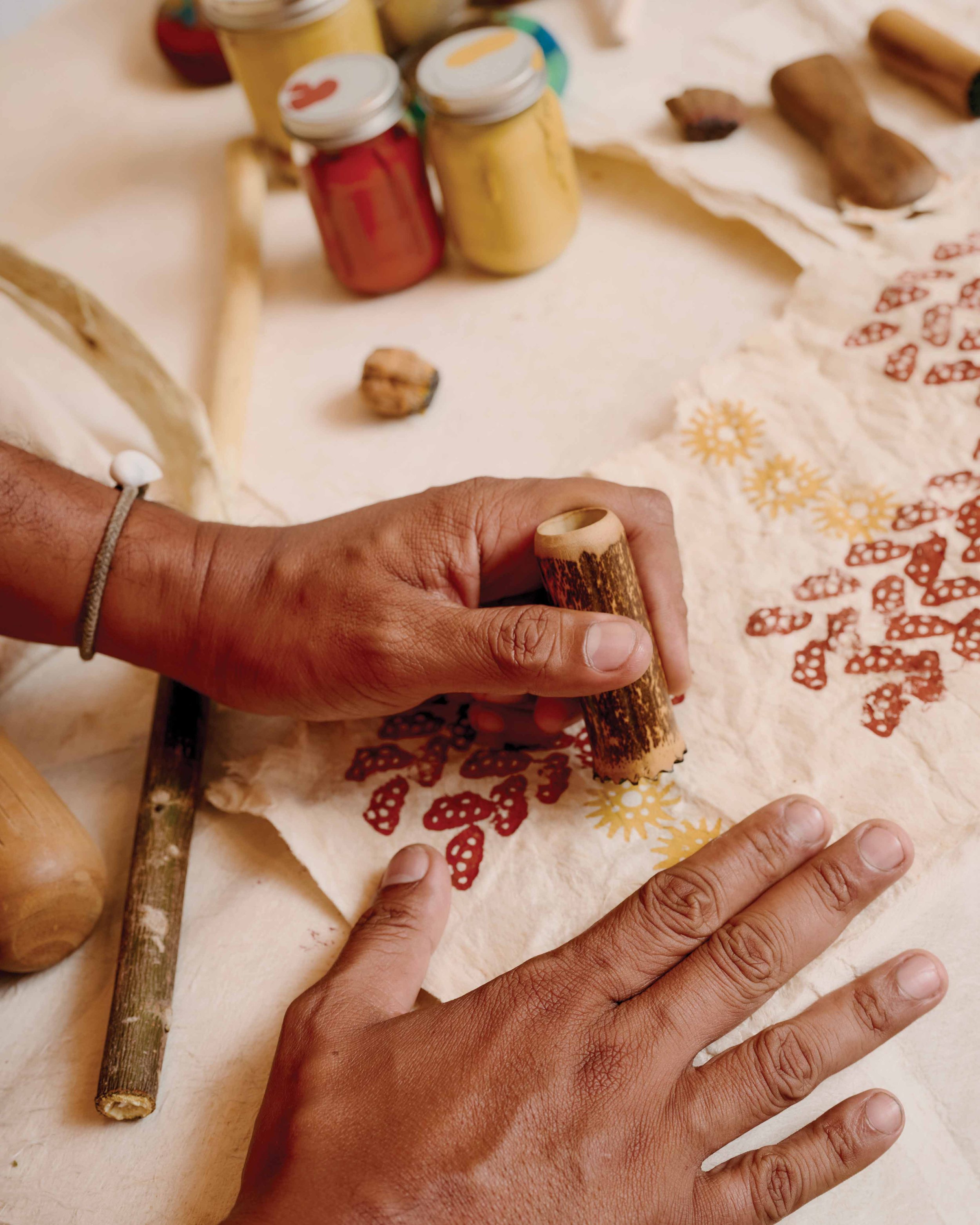
At the Ala Moana boutique, a Hermès artisan demonstrates the meticulous handwork and traditional savoir-faire at the heart of petit h.
“We’re very deliberate in where we want to be,” Mahady says.
“Hawai‘i is such an important market for us, and there’s such a longstanding culture of craft here. We thought this is a market where we have clients who really appreciate and understand craftsmanship, history and culture.”
That shared appreciation for craft gets to the heart of petit h.
In its Pantin workshop outside Paris, remnants from Hermès’ other métiers
— silk, leather, porcelain, crystal, metal and more — are gathered rather than discarded. Artists and artisans experiment with these “dormant materials,” pairing things that might otherwise never meet.
“We do with what we have in our hands,” says de Virieu, who has led the métier since 2018. “We see the material, and then we start to think.”
It completely flips the usual design process. Instead of beginning with an idea and searching for materials to execute it, petit h starts with the materials and asks: What could this become? The creative process becomes a dialogue between the material, the artisan who works with it and the vision of the artist.
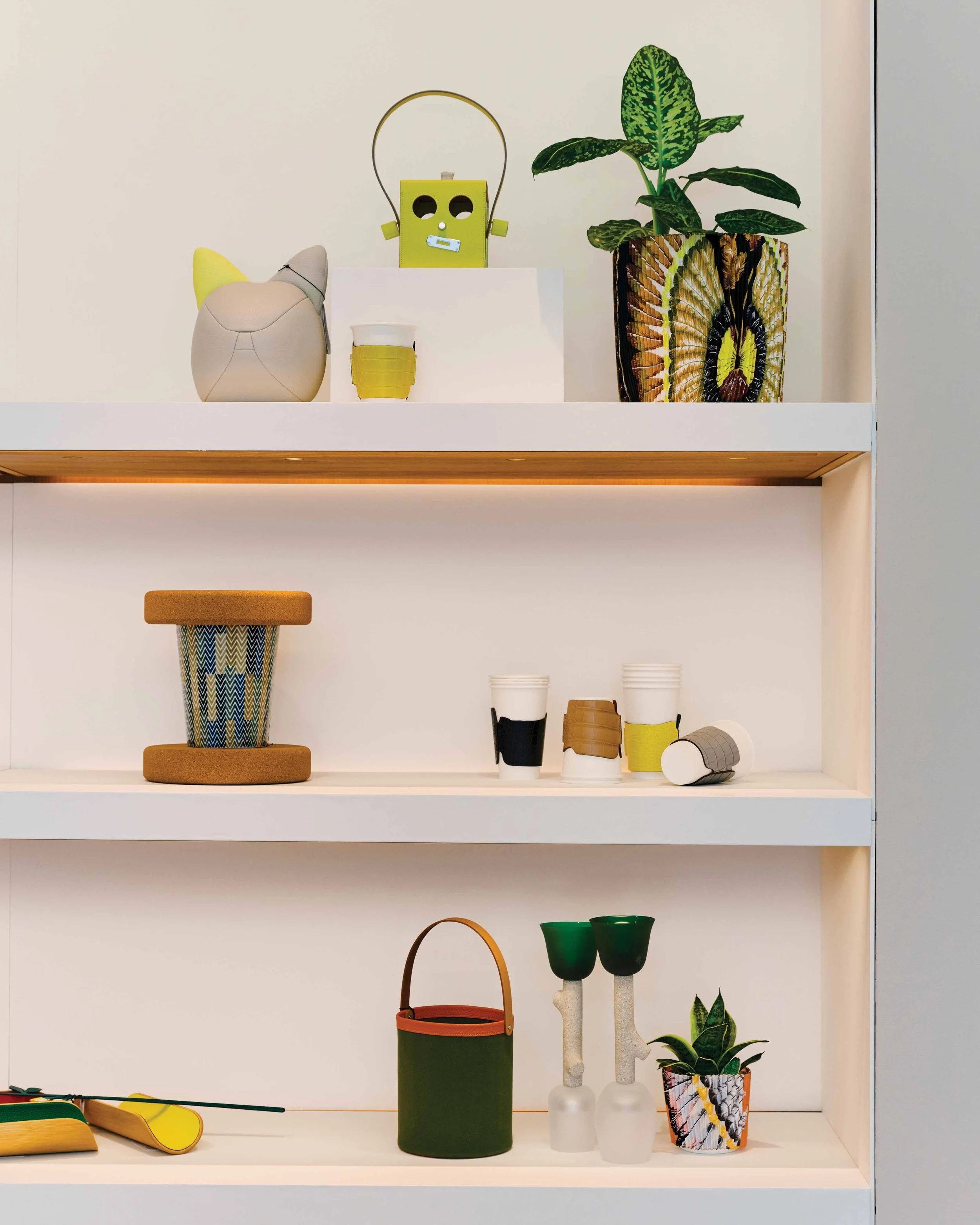
“We do with what we have in our hands … We see the material, and then we start to think.”
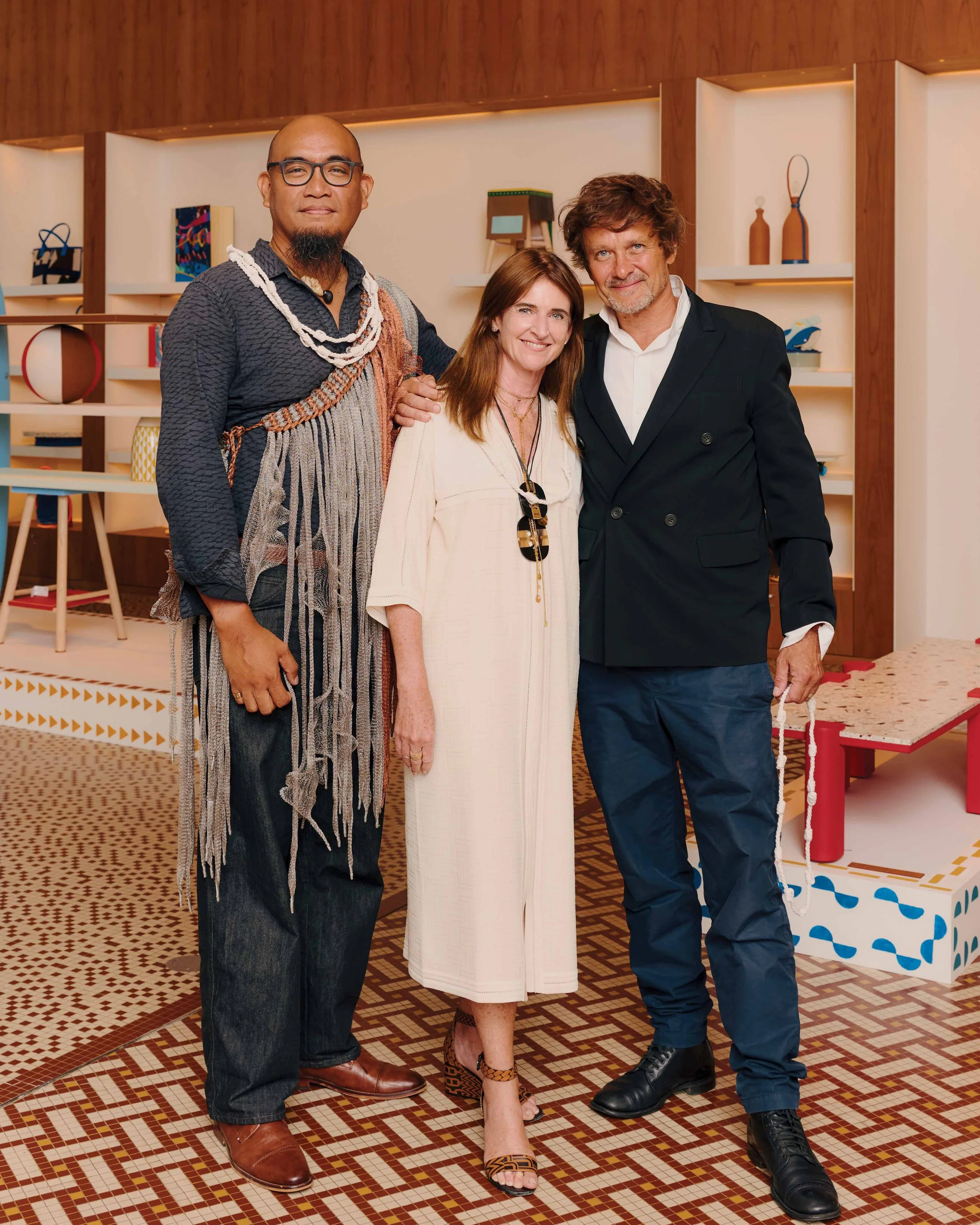
Hawai‘i artist Marques Hanalei Marzan; Diane Mahady, president and CEO of Hermès Americas and Godefroy de Virieu, creative director of petit h.
(All photos courtesy Hermès.)
But beneath the whimsy is a thoughtful idea.
“Petit h is less about consumption and more about stewardship,” Mahady says.
It is, she explains, about an “obligation or responsibility for the future.” Craftspeople become problem solvers, taking what already exists and finding a way “to give it a life.”
It’s an idea that resonated with Marzan. After spending time with the petit h teams in Paris and New York, he saw parallels between the Hermès philosophy and Hawai‘i’s relationship with materials and craftsmanship.
“Creativity, innovation and imagination are part of tradition,” he says. “The things that we think of as traditional are only that because they’re based in time. ... We also have to remember that we will be ancestors one day, too, for generations in the future.”
Founded in 2010, petit h operates somewhere between practicality and play, reuse and reinvention. Its Hawai‘i stop makes those connections particularly fitting.
After all, good design isn’t always about starting with something new. Sometimes it’s about looking more closely at what is already in your hands — and imagining what else it might become.
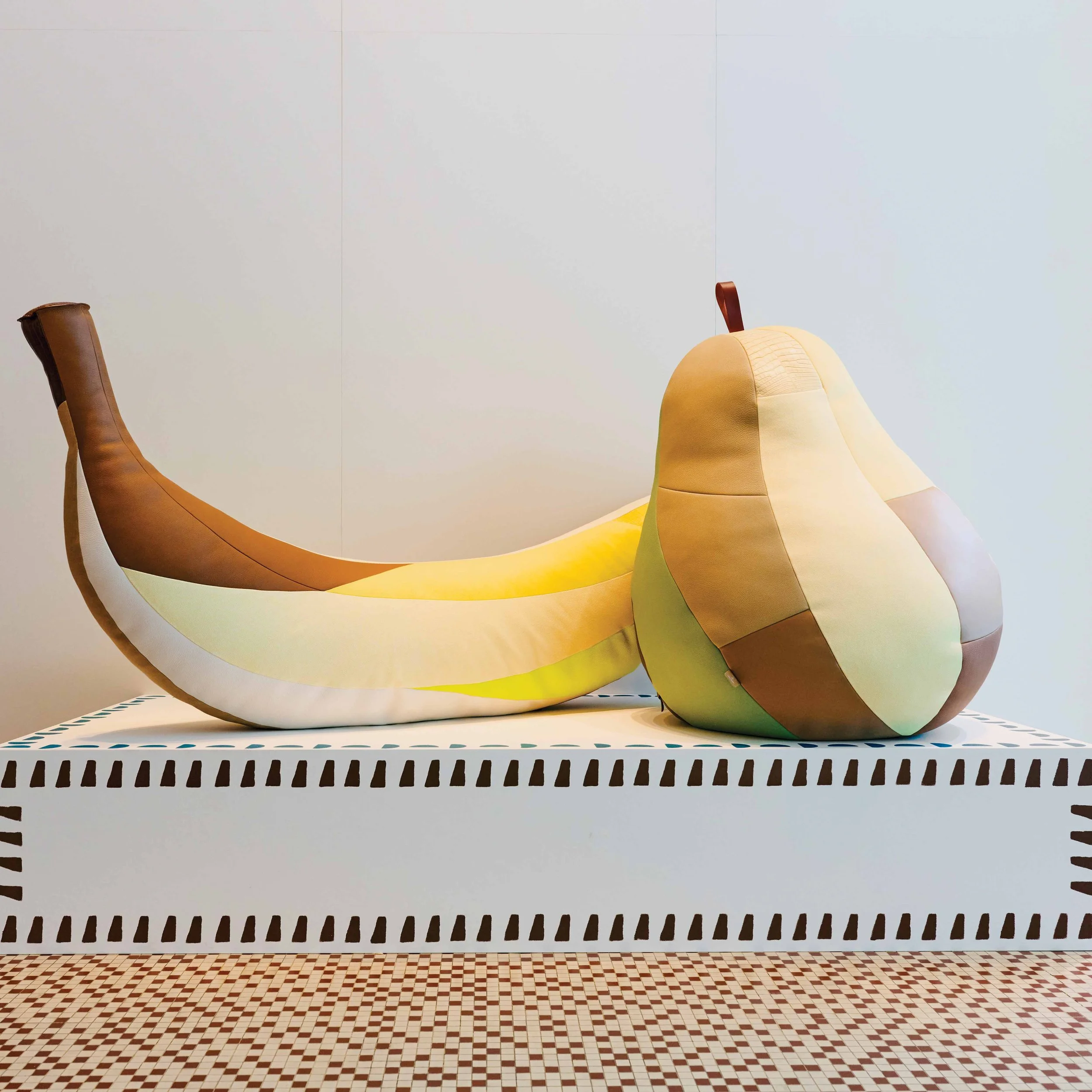
(All photos courtesy Hermès.)