
The Art of Stewardship
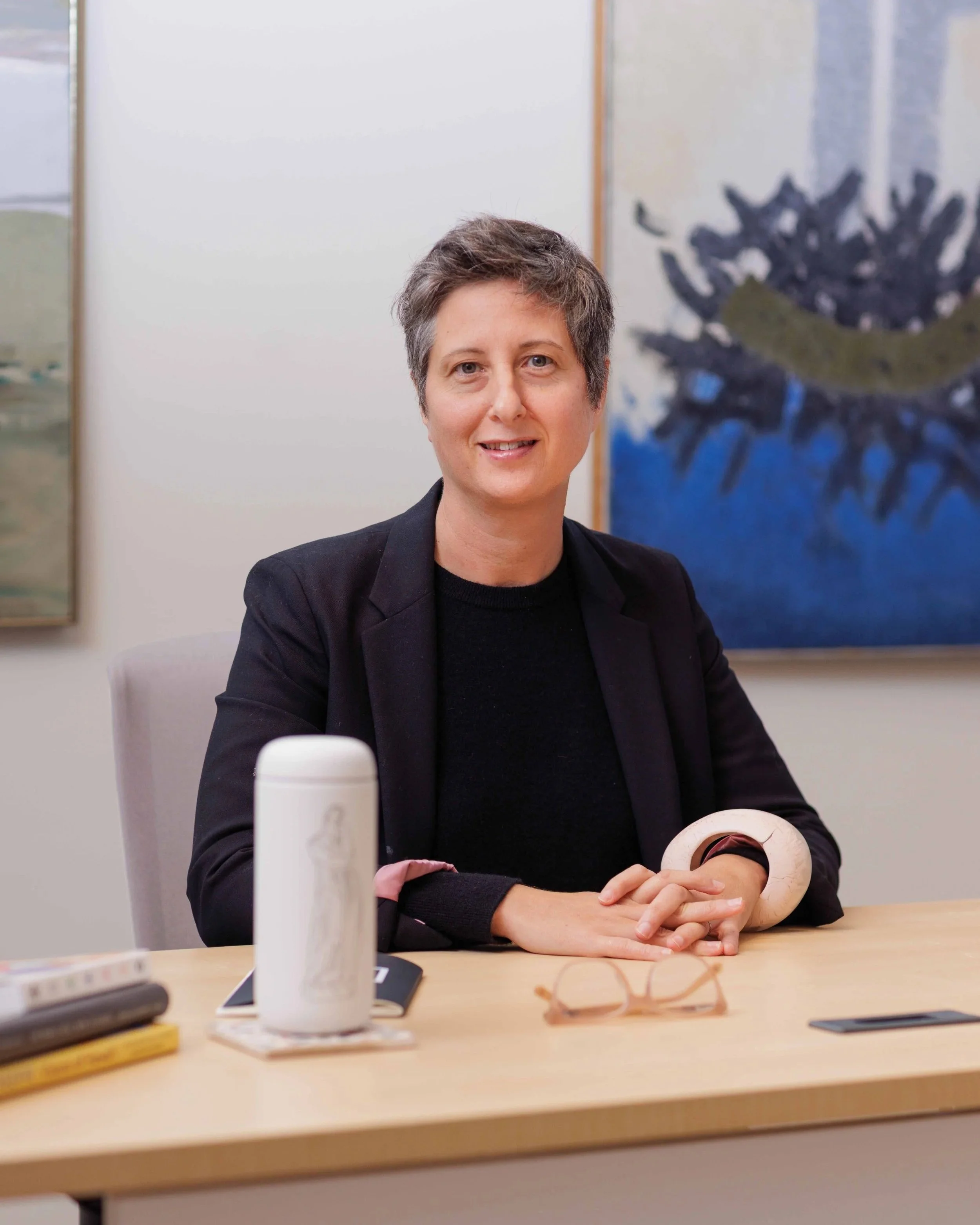
At her office at the Honolulu Museum of Art, interim director Penni Hall reflects on stewardship and making a lasting community impact.
(All images courtesy Honolulu Museum of Art & Alec Singer.)
On a breezy morning in Honolulu, as trade winds move through the open courtyards of the Honolulu Museum of Art, Penni Hall is thinking about stewardship.
Not only of the works on display — or the 50,000-plus paintings, prints, sculptures, and textiles that make up the museum’s collection — but also of the people who care for the art as well as the campus itself. Plus the systems that keep HoMA solvent. The public trust that underwrites it all.
In conversation with Hall, one idea comes up again and again: stewardship.
“When you’re talking about museums, it always comes back to trust,” Hall says. “Trust with staff, with donors, the board, the community… You have to build that. Otherwise you can push short-term directives but you’re not creating lasting change.”
Hall is taking the long view. Her perspective is shaped by proximity: For the past three years, Hall served as HoMA’s chief operating officer, overseeing everything from budgets to buildings to IT. Few people understand the museum more intimately. Last summer, she moved from COO to interim director and CEO after former director Halona Norton-Westbrook left for the Modern Art Museum of Fort Worth in Texas.
Now, Hall is at the helm. At least for the moment.
“You never know how long it’s going to be when you’re in an interim role but I don’t believe in just treading water,” she says. “We owe our staff and this community much more than that.”
Founded in 1927 on the belief that art and education could serve Hawai‘i’s diverse communities, the Honolulu Museum of Art (originally the Honolulu Academy of Arts) has long functioned as a community hub as much as a cultural repository. A century later, that role is both idealistic and urgently needed. Museums worldwide now wrestle with questions of meaning and relevance in an era of digital distraction, shifting visitor expectations, and tenuous federal support for the arts.
Add the responsibility of contextualizing Hawai‘i’s complex histories in thoughtful exhibitions that speak to both island residents and tourists, and Hall’s task feels less like caretaking and more like walking a tightrope.
If she’s daunted, she doesn’t show it. After all, Hall has built a career out of guiding major cultural institutions through periods of growth. Before HoMA, she served as Head of Strategic Projects and Governance for M+, Hong Kong’s premier museum of contemporary art, architecture, design, and moving image.
“When I first joined, M+ was an idea. We literally opened a museum from scratch,” says Hall, who spent long hours developing what the team called the “four quadrants”: the building, the staff, the collection, and the audience. “We thought about what it would be like for someone walking into this space for the first time, especially a museum at a global scale that the city hadn’t had yet. Everything from the architecture to the visitor experience had to be considered through that lens.”
The work was logistical (fun stuff like budgets and timelines) yet also existential: What does a city without a longstanding museum expect from this type of institution? Hall’s goal was to help align the conceptual vision with programming and audience engagement. When M+ opened in West Kowloon in 2021, it quickly established itself as a significant cultural landmark for Asia. Today, the museum draws millions of visitors and is ranked among the 20 most visited art museums in the world.
Hong Kong sharpened skills Hall had been honing for years. At London’s National Theatre, she previously helped steer one of the UK’s most celebrated publicly funded performing arts venues through a leadership transition while reshaping its education initiatives. Before that, working at the Melbourne Fashion Festival, Hall learned how large-scale storytelling still relies on disciplined operations.
“The positions I’ve ended up in were about transformation,” says Hall. “I am drawn to the question of, how do you make the best platform for art to be created … and how can we bring people together across generations and backgrounds and lived experiences to engage with art in meaningful ways?”
In Hawai‘i, that question is less hypothetical and much more immediate as HoMA approaches its centennial in 2027. Hall sees next year’s anniversary as an opportunity to celebrate the past as well as strengthen the museum’s foundation for the next hundred years. “[HoMA] has to be able to be global while staying rooted in our neighborhood, our community,” she says. “We are the only museum in the world with this collection. Ours is a perspective that no one else has.”
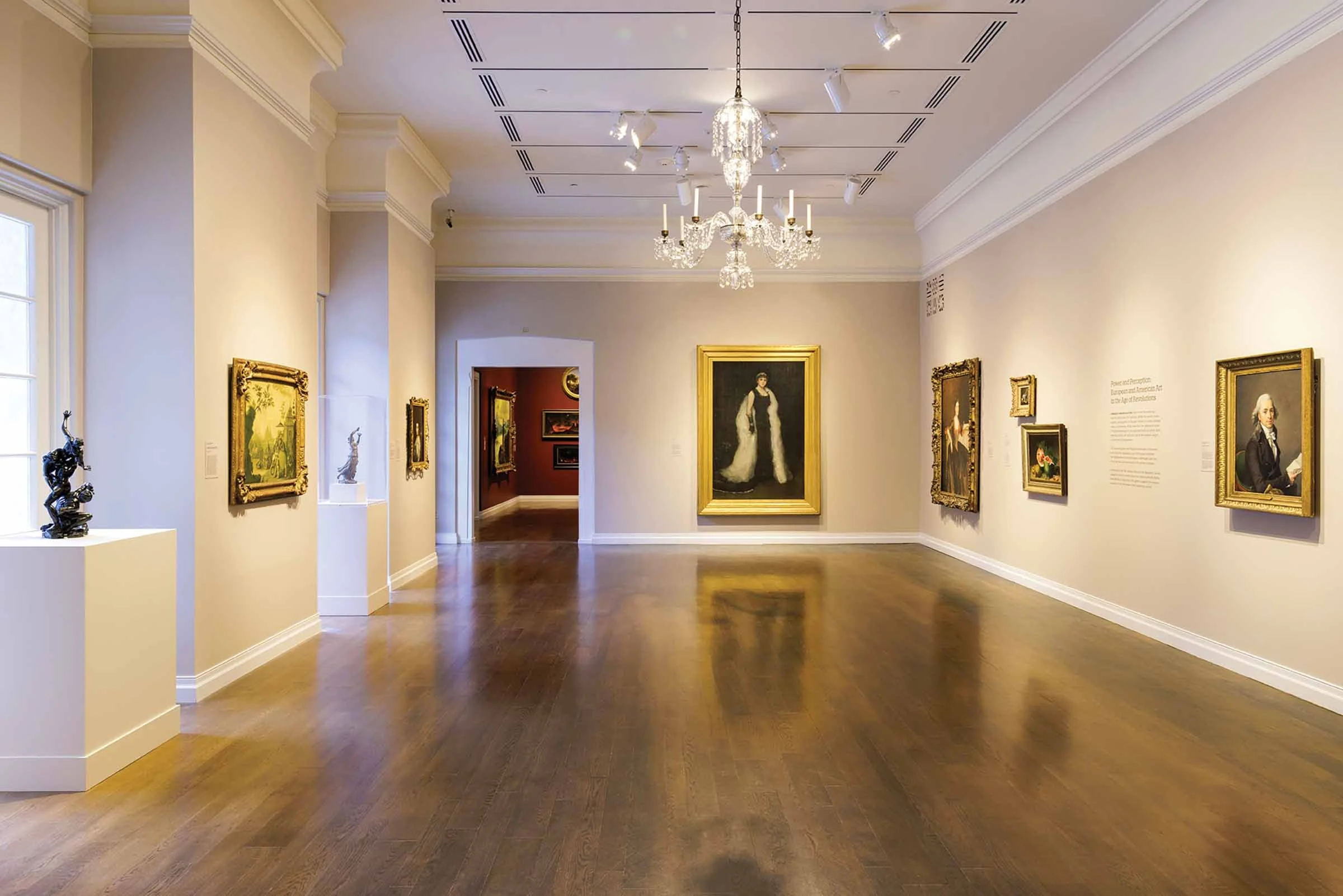
Across its galleries and courtyards, HoMA fosters a sense of connection as much as contemplation.
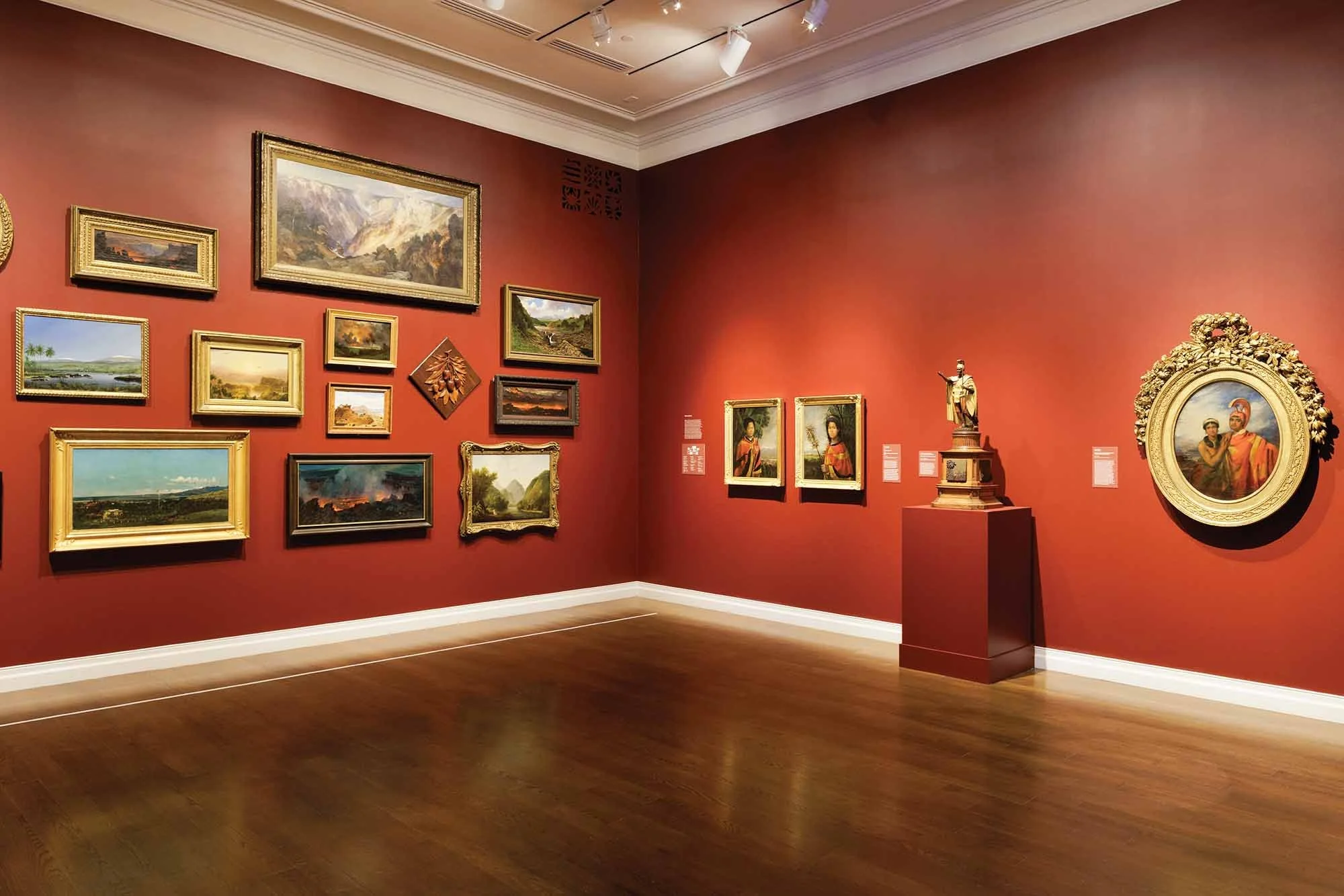
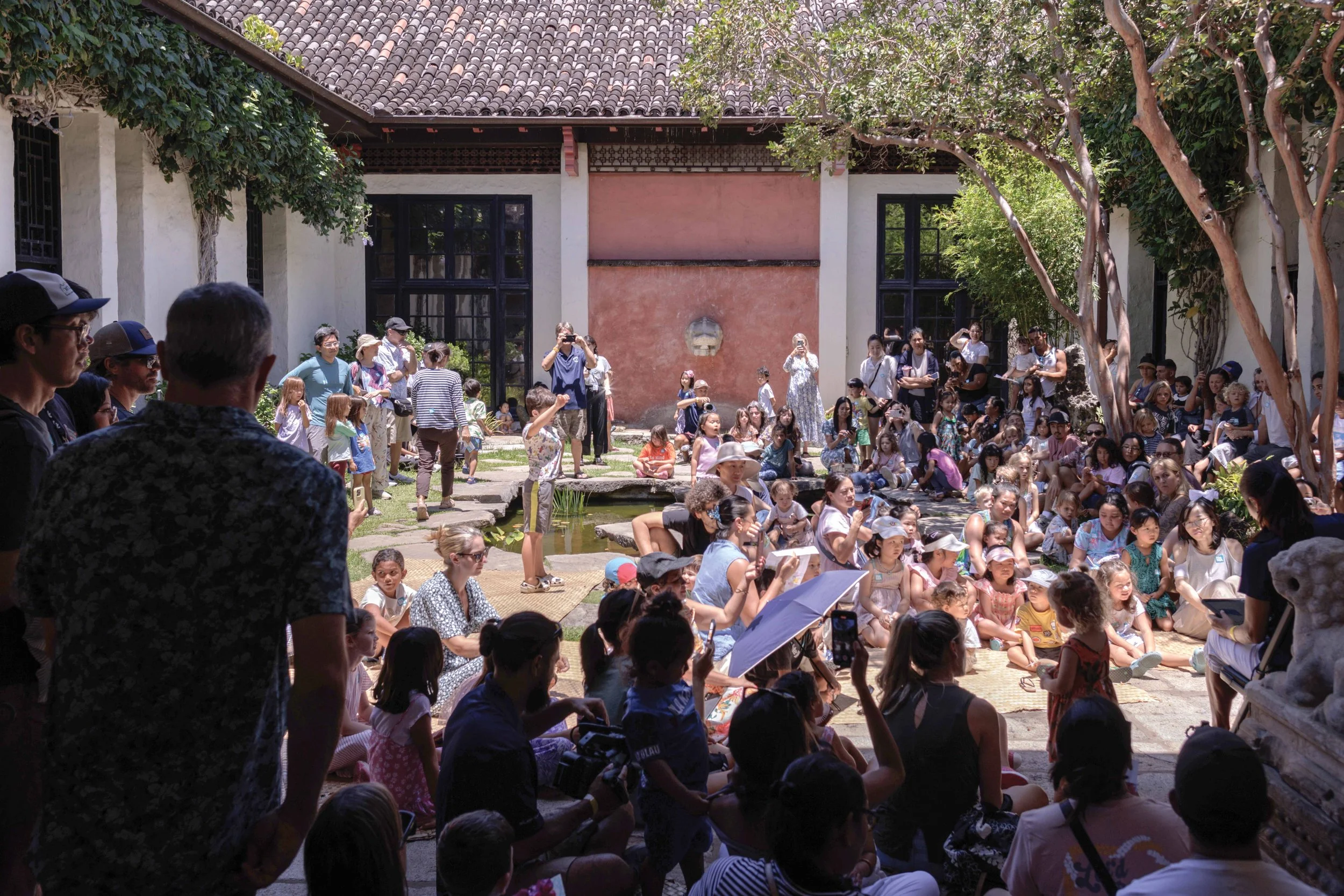
(All images courtesy Honolulu Museum of Art & Alec Singer.)
Luckily, exhibitions that begin with local stories but speak to the wider art world are exactly the kind of shows HoMA excels at.
Take last year’s Home of the Tigers: McKinley High and Modern Art. Curators Alejandra Rojas Silva and Tyler Cann were digging through the museum’s archives when they noticed something remarkable: several of Hawai‘i’s most prominent artists all attended McKinley High School, just two blocks from the museum. Among them were Raymond Han, Ralph Iwamoto, ‘Īmaikalani Kalāhele, Robert Kobayashi, and John Chin Young, as well as Metcalf Château members Satoru Abe and Keichi Kimura. Home of the Tigers revealed unexpected connections between the artists’ shared beginnings and the unique directions their careers followed.
“Discovering that all these artists came out of the same school, influenced by their teachers just around the corner, shows that whether someone went to McKinley or is simply visiting, they can see how art and arts education can have a major impact on people’s lives,” says Hall.
If Home of the Tigers traced artistic lineage back to a single high school, Kapulani Landgraf: ‘Au‘a confronted history on a national scale. Unveiled on January 17, 2024, the anniversary of the 1893 overthrow of the Hawaiian Kingdom, ‘Au‘a featured 108 photographic portraits of Kānaka ‘Ōiwi artists, activists, teachers, cultural practitioners and community leaders. Each overlaid with a declaration echoing scholar and activist Dr. Haunani-Kay Trask’s refrain from the 100th anniversary of the overthrow in 1993: We Are Not American. He Hawai‘i Mau a Mau.
The exhibition had appeared at the museum before, during the 2019 Honolulu Biennial, but this iteration marked its debut as part of HoMA’s permanent collection. This time, the photographs hung unframed, protected only by a stanchion made from lengths of translucent na‘au (pig intestine) threaded with chains of nylon zip ties, the same type sometimes used by police in place of handcuffs. Each tie formed the shape of an eye, a recurring motif in Landgraf’s work. Together, the links also resembled a fish, a reference to the layered meaning of ‘au‘a, which can describe an ‘ōpelu (mackerel scad) that refuses to be caught. (Another definition of ‘au‘a is “to withhold.”)
“You can feel the power of the history, the voice, and the place. Through [Landgraf’s] powerful photography, I remember seeing these images for the first time and wanting to connect with the people, and feeling like I was,” Hall says. “This is one of the wonderful exhibitions we’ve had that brings a sense of transformation through the conversations it generates.”
Exhibitions like ‘Au‘a spark the kind of engagement and reflection that Hall hopes to continue cultivating throughout the museum. “When I first arrived, it really was about listening and learning. You can’t come in and assume that you know better than anyone else on the ground.”
Since becoming interim director last summer, Hall has met with staff, visitors, donors, and supporters, hearing stories that reveal how deeply HoMA is woven into people’s lives. People tell her about catching the bus to the museum alone at age 9, about attending art classes at Linekona (today the Honolulu Museum of Art School), about returning to the museum years later with children — and grandchildren — of their own. The joy, the curiosity, the sense of belonging; these are the experiences that Hall feels responsible for protecting.
“This museum is much greater than all of us. It creates memories for people. I hope that’s what HoMA can continue to do, whether it’s for our centennial or our bicentennial,” Hall says. “That’s the responsibility of stewardship: to make sure the museum still plays that role, that people feel they’re part of it and they belong.”
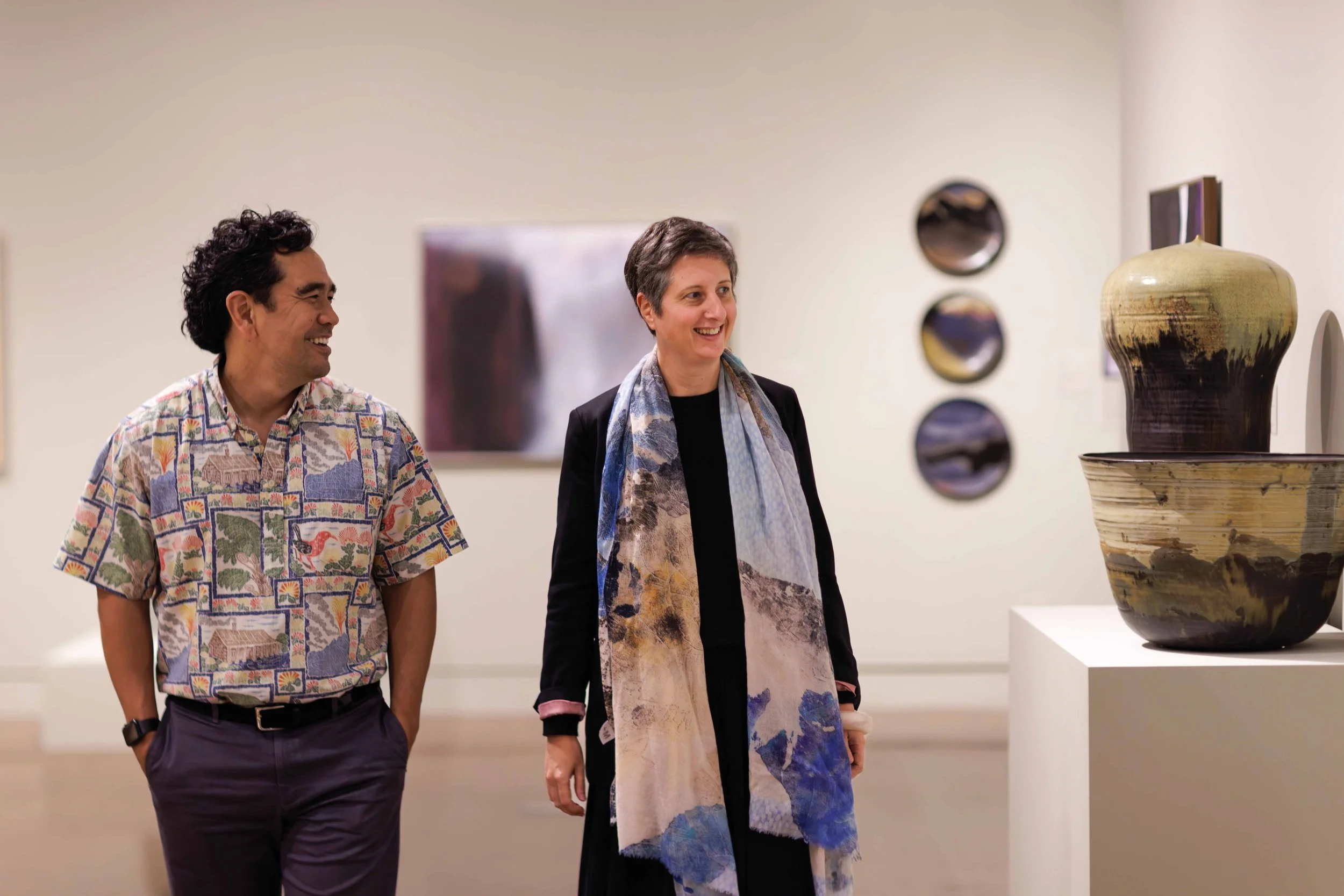
“[HoMA] has to be able to be global while staying rooted in our neighborhood, our community,” Hall says. “We are the only museum in the world with this collection.”
(All images courtesy Honolulu Museum of Art & Alec Singer.)