
Beyond the Gates
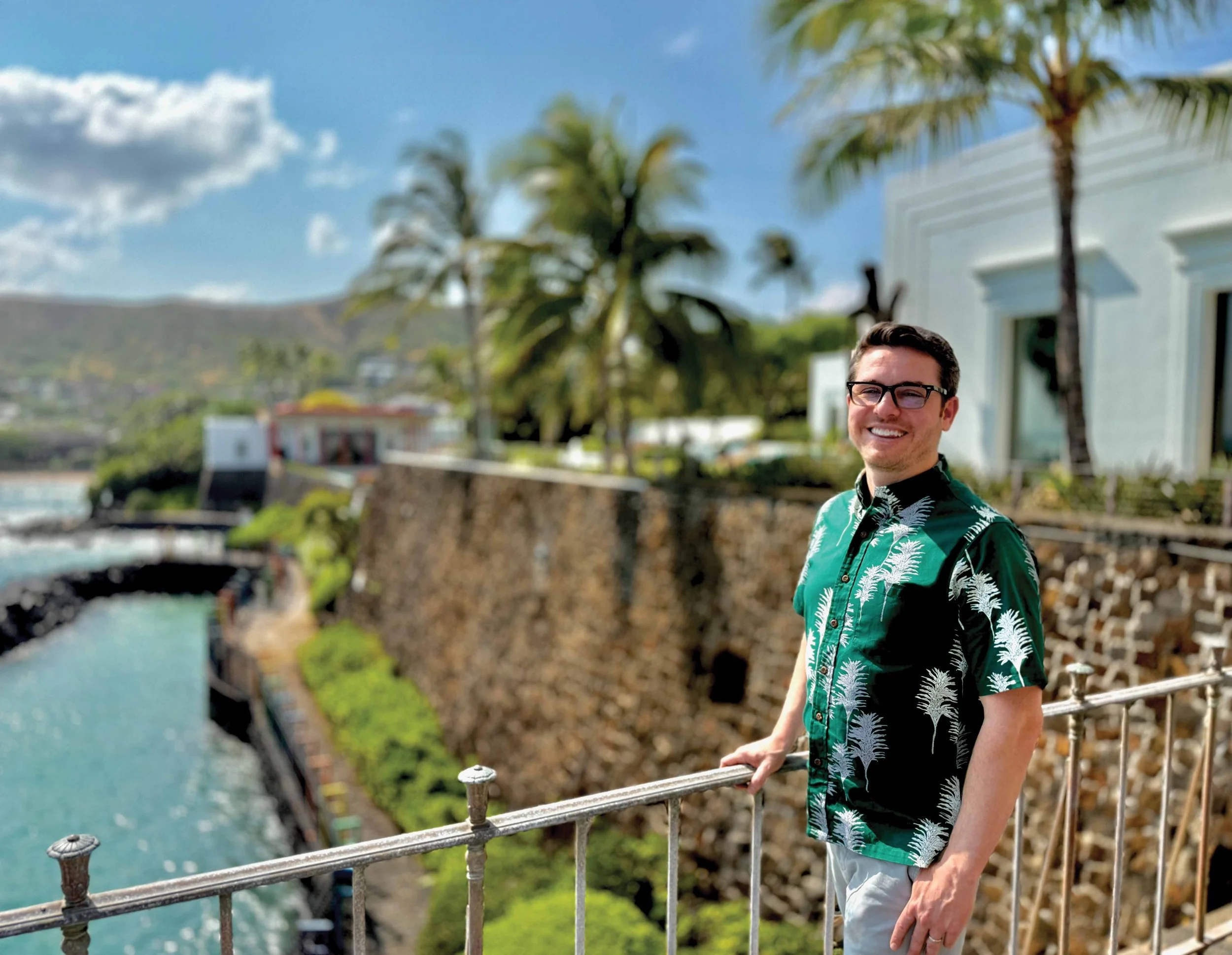
Building on Duke’s legacy, Weitz’s mission is to make Shangri La more than a museum — a welcoming home for creativity, conversation and Hawai‘i’s living culture.
(Portrait by Jean H. Lee.)
The first time Ben Weitz spotted Shangri La, he was surfing off Kupikipiki‘o — Black Point — west of Diamond Head. That was in 2001, when he was a graduate student in Honolulu.
“I’m embarrassed to say, I thought when my friend said, ‘I think it’s Doris Duke’s estate,’ I said, ‘Doris Day’?”
It’s not surprising that Weitz, a Los Angeles native, would think first of the Hollywood singer and actress Doris Day. However, he quickly learned the mansion was once the winter home of the tobacco heiress Doris Duke, whose family name graces Duke University. A year later, the refuge she had nicknamed Shangri La, after the mythical paradise, opened as a museum of her collection of Islamic art.
It wasn’t until two decades later that Weitz finally stepped foot inside the breathtaking home: to interview for the role of executive director of the then-named Shangri La Museum of Islamic Art, Culture and Design. Since assuming that role in 2023, he has thought back to how most people only see Shangri La from the water — and has sought to open the space to more artists, creators and visitors.
His mission: to transform Shangri La from a museum known for housing Duke’s art into a center for ideas and discussion that also honors and welcomes the people, heritage and Hawaiian culture that Duke — who learned to surf likely from another Duke: Kahanamoku — adored.
On a hot summer Wednesday, as Weitz shows me around the property, music is softly emanating from a darkened room. We peep in to find performers from their Wehiwehi residency sprawled out on mattresses, eyes closed, as they absorb and contemplate the music in preparation for performances at Bishop Museum and at Shangri La. We back out quietly.
Now called the Shangri La Center for Cultures and Ideas, Duke’s winter home is now a campus that hosts not just visitors to see the art collection on Thursdays, Fridays and Sundays but also artists, musicians and even chefs-in-residence. Recently, Shangri La opened the living room with a performance by dancers from Ballet Hawaii.
Earlier, Weitz had been practicing a traditional ‘oli welcome, composed by Kuana Torres Kahele, with the center’s Native Hawaiian Cultural Advisor, Kumu Vicky Holt Takamine. His first chance to use it with his team came earlier in the year when Shangri La hosted a reception with leaders from across the Pacific Islands.
For Weitz — a polyglot who started his career with Universal Music before he was a grad student at the University of Hawai‘i at Mānoa and went on to work at Disney — the mix of art, dance, food and music from a mix of cultures is entirely natural. He later moved to UCLA as the university’s inaugural chief brand officer. But a return to Hawai‘i was always in the plan. And transforming Shangri La felt like a calling, his kuleana.
Leaving his husband, Daniel, and their twins, Henry and Brandon, in Santa Monica, Weitz made 39 trips between Honolulu and the continent until the boys finished second grade and they were able to relocate. Their newest addition to the brood is Vanessa the Great Dane.
His vision: to turn Shangri La into a place that lives up to O‘ahu’s legacy as a gathering place. He notes that the importance of hosting gatherings is a thread that runs through all the cultures that come together at Shangri La. “When you talk about Islamic or Asian cultures, you have the idea of hospitality, which is so important here in Hawai’i,” he says. “We’re making connections.”
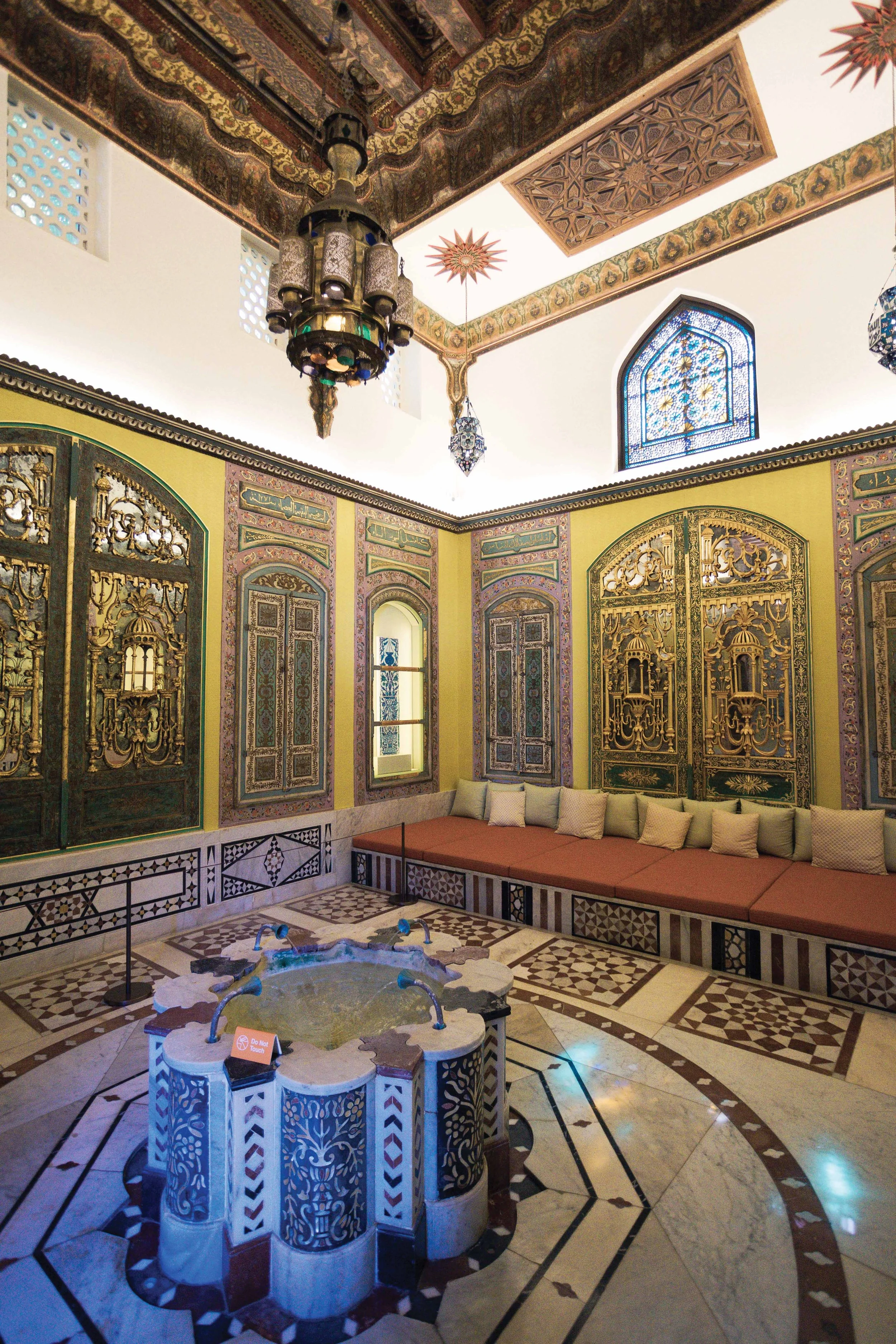
Each room at Shangri La tells a story of global artistry, bringing together architectural treasures from across the Islamic world in a home unlike any other in Hawai’i.
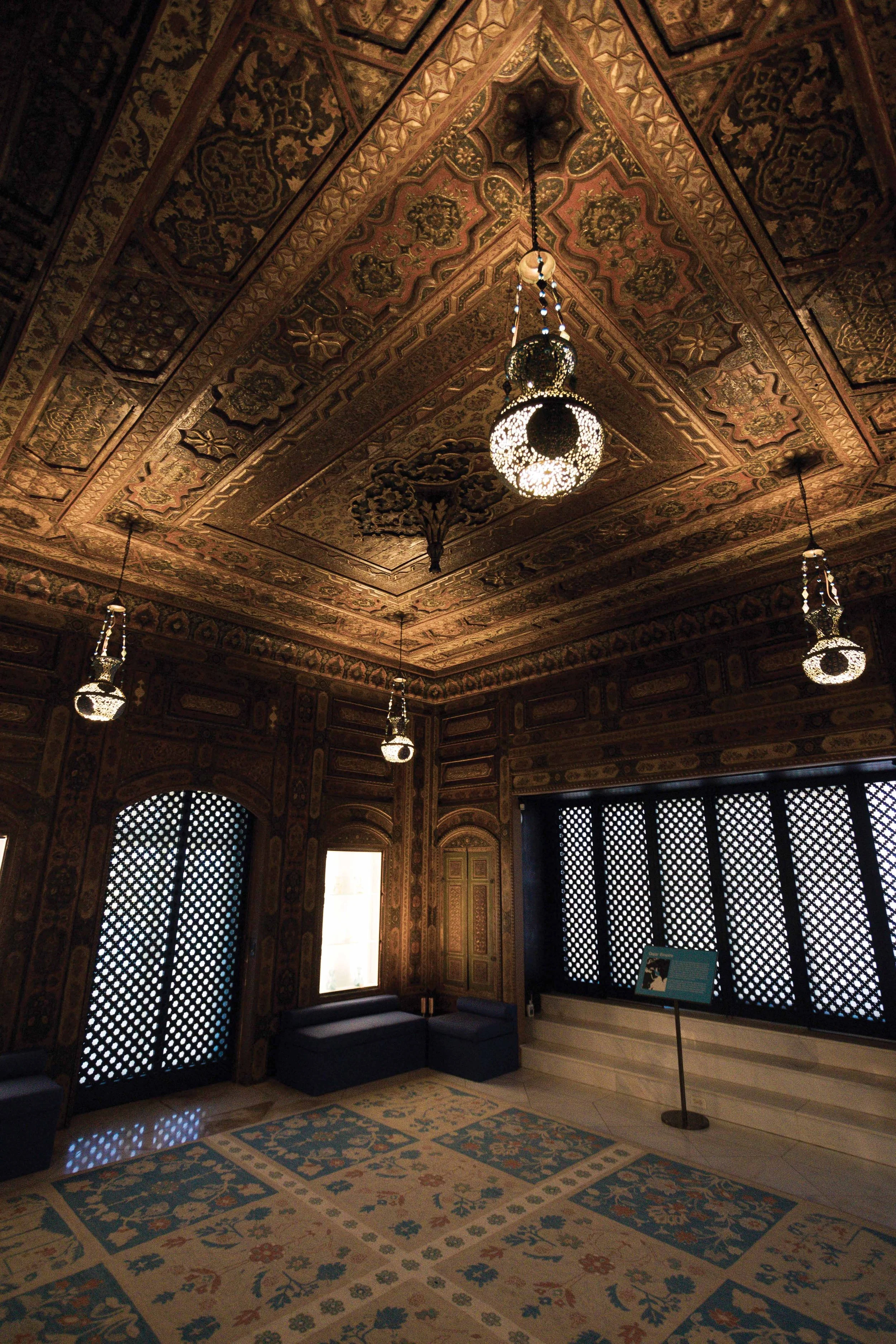
(Photo by Bodie Collins.)
To introduce more people to Shangri La, the center has begun collaborating with Bishop Museum as well as HoMA for shuttle bus access, with tickets set aside for kama‘āina. Off-site events such as Night/ Shift at Capitol Modern and two annual larger gatherings also provide opportunities for the public to engage.
From the lānai, Weitz points out the honu and surfers bobbing in waters in front of us. To the left, Le‘ahi looms. He tells the story of one particularly busy day; Shangri La was hosting US-China diplomatic discussions while Weitz was meeting with a member of the Māori royalty and Doris Duke Foundation CEO Sam Gill was interviewing the chair of the National Endowment for the Arts.
“That’s when I had the ‘a-ha!’ moment of what we are: a center for cultures and ideas,” he says.
He leads us to the Playhouse, originally Duke’s pool house, modeled after the Chehel Sotoun, a 17th-century royal pavilion located in Isfahan, Iran. The doors are open to welcome in the breeze. The space has become a haven for global conversations, debate — and negotiation.
In 2023, South Korean and Japanese diplomats ditched formalities and historical tensions and carried out groundbreaking working-level talks that would help set up historical “trilateral” discussions among the United States, Japan and South Korea at Camp David. More recently, policymakers have gathered at the Playhouse from around the world to discuss health and emerging technology.
Weitz takes me to the back garden of the Playhouse, one of his favorite spots on the property, and stands beneath a quietly majestic lauhala tree that provides shade and space for reflection. We are surrounded by the smell of plumeria, protected from the sound of the crashing waves.
“What we’ve learned from Kumu is to ‘kilo,’ or to use all of your senses,” he says. “What do you smell? What do you feel? What do you taste? What do you see? What do you hear?”
As the afternoon heat bears down on the waterfront property, the sun glancing off the white walls, we duck into another favorite spot, a courtyard just off a main passageway. We’re not the only ones who have sought refuge there. A pair of Manu-o-Kū birds have nestled in the kukui tree in the courtyard. Like Weitz, they’ve found the perfect quiet and protected spot to call home.
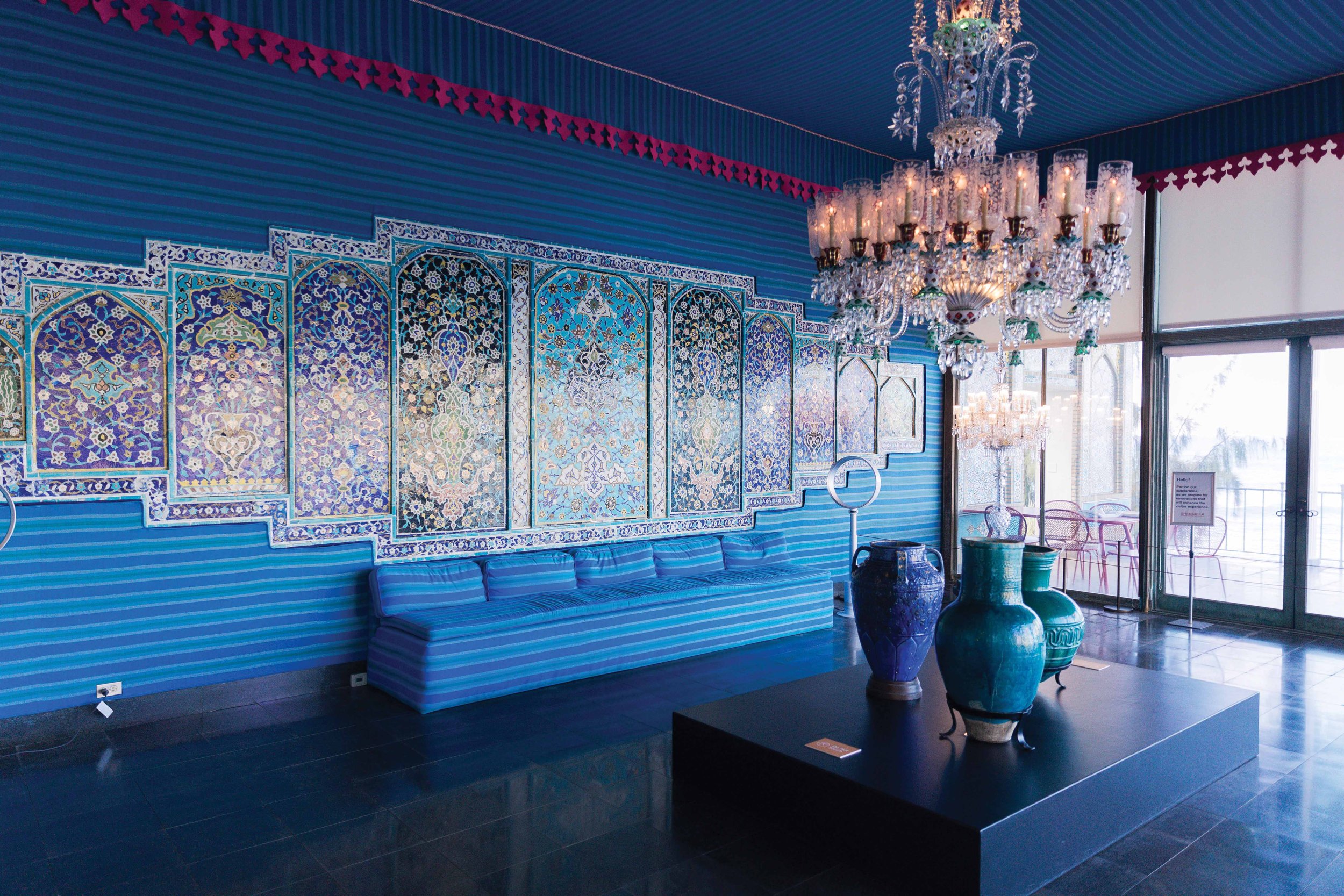
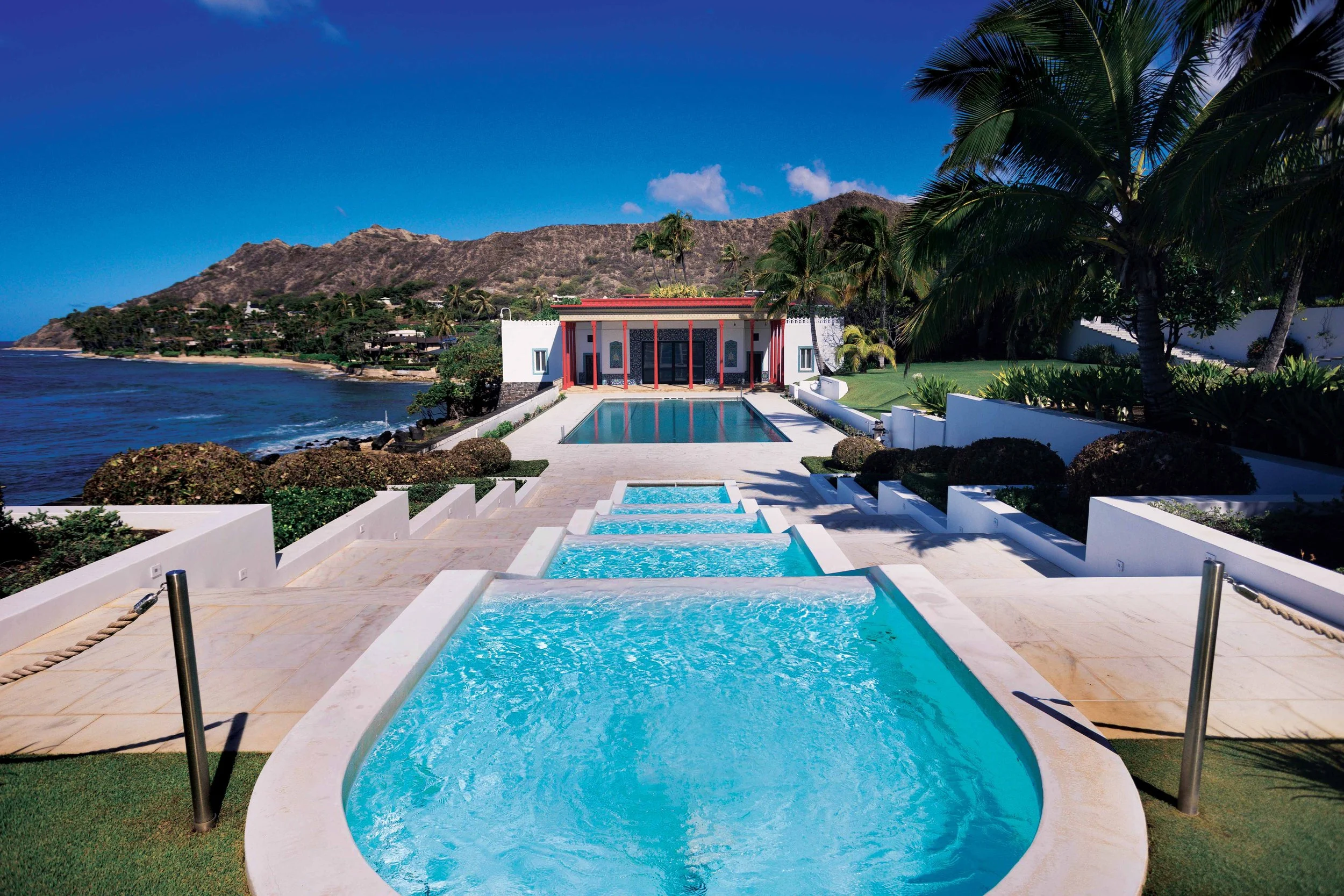
(Photo by Bodie Collins.)